
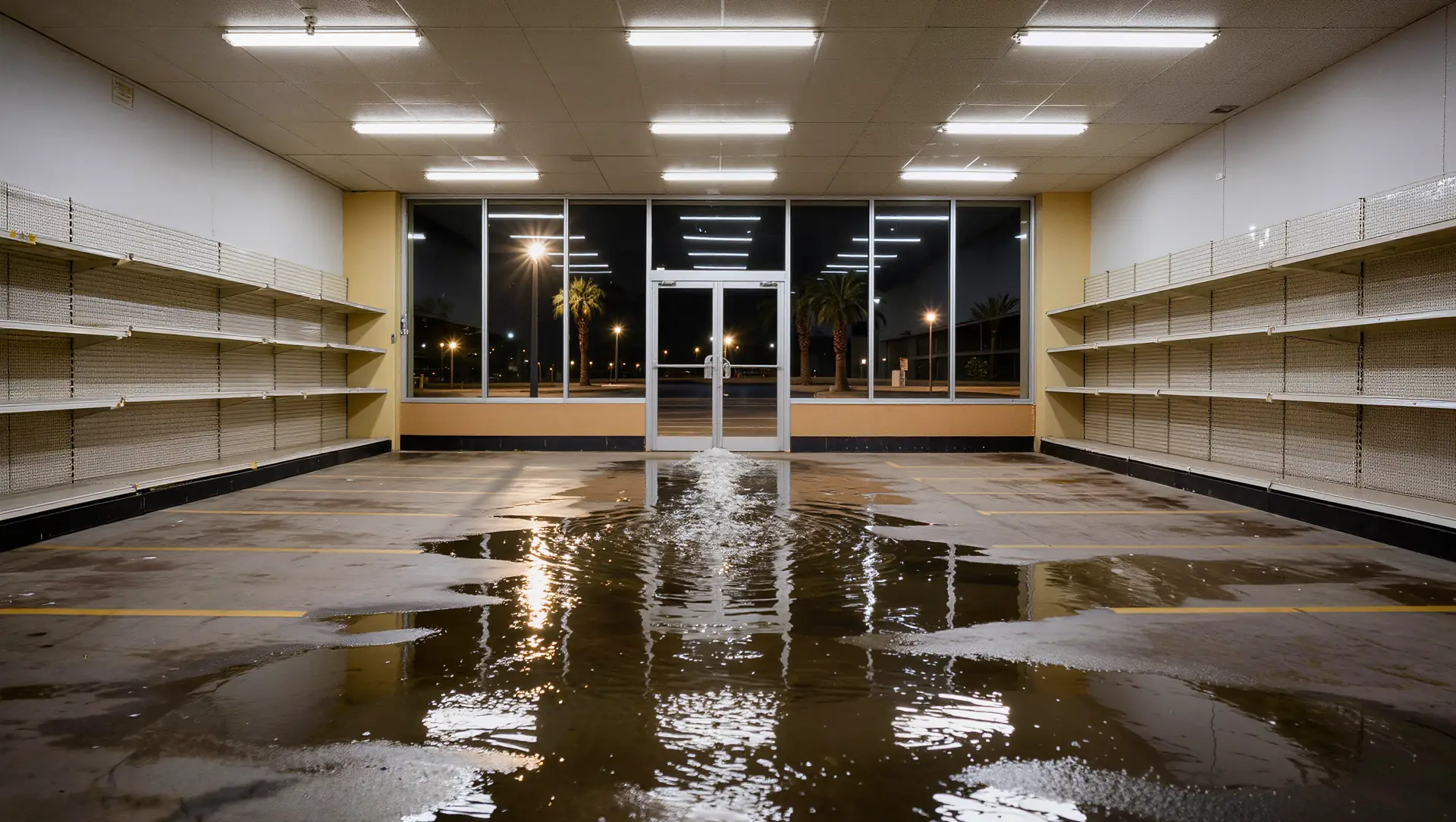
Commercial emergency plumbing · open 24/7
24/7 commercial emergency plumbing. Shut off the water. Then call.
Saturday, 9:40 p.m. A supply line under the bar lets go, and the only person who knew where the shutoff was went home at four. We take that call all night, every night, across the Valley.
- Dispatch 24/7. Weekends and holidays are just more days.
- Active leaks and backups go first. Same-day when a crew is free.
- A flat price before the work starts. It doesn’t change once you agree.
- Photos and video, for the landlord tonight and the insurer tomorrow.
Veteran owned · Licensed, insured & bonded · ROC #340524
- LicensedROC #340524
- InsuredFully covered
- BondedWork guaranteed
- Veteran Owned& Operated
- 24/7 ServiceEvery day
- Upfront PricingFlat rate
Before anyone arrives
The first ten minutes decide most of the damage. Spend them at the valve.
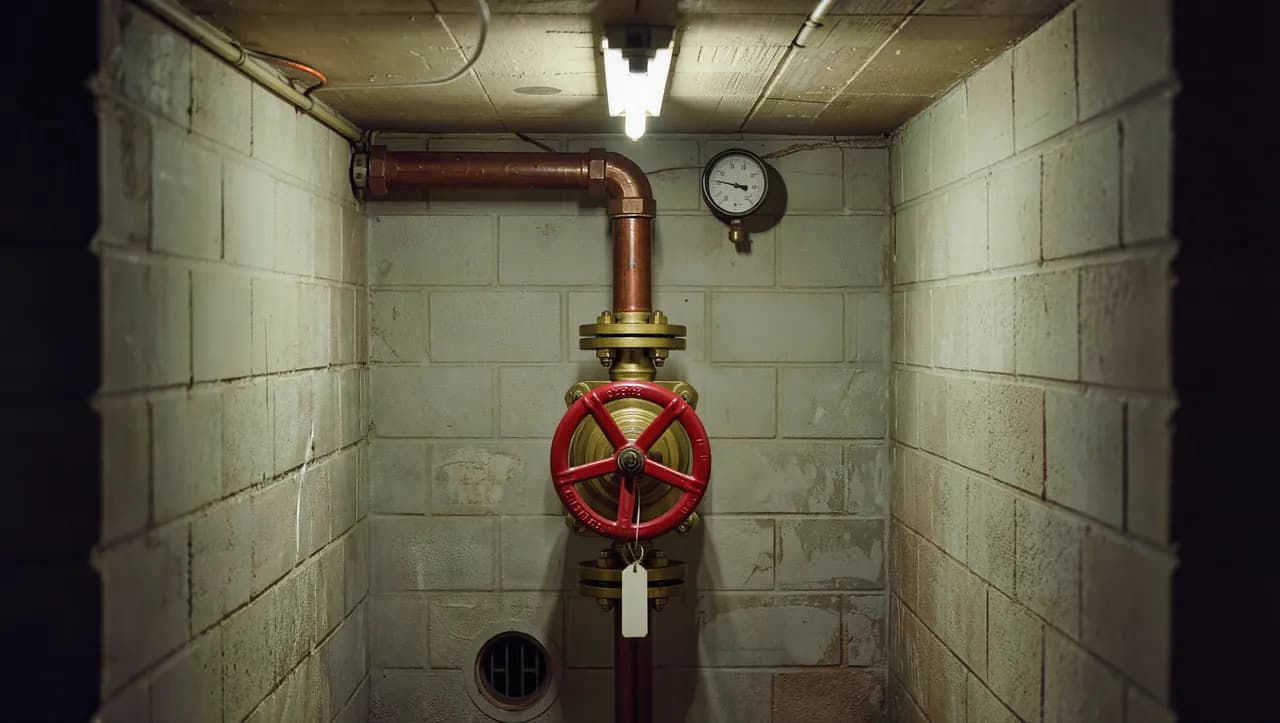
The main shutoff usually lives near where the water line enters the building: a mechanical room, a closet by the restrooms, a box near the curb. It is often behind the ice machine. It has often not been turned since the building opened. Tag it. Put it in the closing manager’s binder.
Water you can’t stop
Close the main shutoff. Keep everyone away from anything electrical near the water. Then call.
Sewage coming up a floor drain
Stop every drain on that side of the building, dish machine and ice machine included. The pipe can’t take more. Then call.
Any smell of gas
Get everyone out. Leave the light switches alone. Call the gas utility or 911 from outside, before you call anyone else. We handle the repair once it is safe.
Open 24 hours, every day. The price is quoted flat before the work starts.
What we are called out for
Six problems that refuse to wait for Monday.
Burst and leaking supply lines
A break upstream of the fixture valves, or a main valve that turns out to be decorative.
Sewer and floor drain backups
A blocked main or lateral, returning to the kitchen or the restrooms what they sent it.
No hot water in a food business
A kitchen without hot water can’t run. A failed heater is an emergency even when it isn’t leaking a drop.
Leaks under the slab
Water surfacing through the floor, or a meter that keeps spinning with every tap closed.
Water through the ceiling
A failure in the suite above. Ceiling water often travels a long way from where it started.
Drains overwhelmed in a monsoon
Roof, area and floor drains losing a July argument with the sky. Some of it is weather. Some is a blocked line the storm found first.
What happens after you call
Stop the water first. Argue about the cause in daylight.
- 01
Triage, on the phone
Safety and shutoffs come first. Then a plain decision: send a crew now, or book the first slot in the morning because it can safely wait. You hear which, and why.
- 02
Stop the water
On arrival the job is to isolate the failure, so the water stops moving and the rest of the building keeps running where it can.
- 03
A price, then the repair
You get a flat price for the fix before it starts. If the job turns out smaller than it looked, the price goes down. It does not go the other way.
- 04
Photos, video and a daylight plan
The failure and the repair are documented for insurers, landlords and inspectors. If tonight points to something bigger, that gets a separate, unhurried conversation in daylight.
After the emergency
Most commercial emergencies sent a polite warning first. Nobody opened it.
The drain that was slow in March. The smell in the back hall. Know your shutoffs, keep the grease lines on a schedule, and tonight’s call can be the last of its kind for that building.

Preventive jetting, on a schedule
When tonight’s backup turns out to be a grease line that has been closing for months, recurring hydro jetting keeps it open, on an interval the footage sets, at hours when nobody is cooking.
A camera in the line
A camera inspection shows exactly what is inside the pipe that backed up. You keep the video, the marked locations and a written summary. Guessing is for the lottery.
Every location on one calendar
Restaurant groups and property managers can put each site on its own maintenance interval, with a flat price agreed before every visit. One number to call, for every building.
How it’s priced
Quoted flat before we start. Yes, even at 3 a.m.
- Time of day, access, what failed and what parts it takes all move the price
- You hear the number before anything starts, including at 3 a.m.
- It doesn’t change once you agree to it
- If the job turns out smaller than expected, the price goes down
One failure. Three people with questions.
The leak in one suite floods the next. The landlord’s insurer wants to know what happened and when. The health inspector wants to know whether the kitchen is safe to reopen. Our technicians photograph and video what they find, which gives you something to send the property manager tonight, the adjuster tomorrow, and settles in advance the conversation about whose suite the water came from.
“I've used Bleuwave plumbing for a few issues in my small business and they are great. They are on time and have always been able to fix the issue, and take the time to explain what I can do to prevent the same issue from happening again in the future. I would highly recommend them.”
Asked on the phone, most nights
What managers ask while standing in water
Can you come today?
Does after-hours work cost more?
Can the kitchen reopen tonight?
Where is our main shutoff likely to be?
Should we touch the fire sprinkler valves?
Will you document the damage for our insurance?
It’s after hours and I’m not sure this is an emergency. Should I call?
Valve first. Phone second.
Every minute the water runs, it finds another room. Dispatch runs around the clock, weekends and holidays included, and you know the price before anyone picks up a tool.