Slab Leak Repair in Phoenix & Scottsdale, priced before we start.
It usually starts in a hallway at six in the morning, barefoot. One stretch of tile is warm, noticeably warmer than the rest, and it stays that way all day. Nobody is running a bath. The water heater seems to be cycling more than it used to. What you are standing on is a hot-water line leaking under the concrete, and the warmth is the leak making itself known through four inches of slab.
Nearly every house in the Valley sits on a slab poured directly on the ground. In many of them the copper supply lines were laid beneath the pour, so the pipe spends its working life under the floor, out of reach. It wears in predictable places: where it rubs against gravel or rebar as it expands and contracts with every hot-water draw, and where water chemistry thins the wall from the inside. Eventually one of those spots opens up.
What makes it expensive here is the ground. Parts of the Valley sit on expansive clay that swells when wet and shrinks as it dries; others sit on caliche that barely absorbs water, so a leak spreads sideways looking for a way out. Either way, the soil carrying your slab changes. Doors start sticking. Hairline cracks appear in grout and drywall corners. A cold-line leak, which leaves no warm spot, can run long enough to do all of that before anyone suspects plumbing. This Field Report walks through how that progression unfolds.
You can gather most of the evidence on your own. Shut off every fixture and the irrigation, then watch the meter’s low-flow dial. Close the cold-water valve on top of the water heater; if the dial stops, the leak is almost certainly on the hot side. Walk the floors in bare feet. Listen near interior walls at night for a faint hiss. None of it proves a slab leak, but it tells us where to begin, and it tells you whether this is a call for this week.
It is a call for this week. A slab leak does not heal, and the arithmetic only runs one way: more water under the floor, more soil movement, more flooring to lift when the day finally comes. The $14,000 Drip adds up what that delay tends to cost in Phoenix. Most cases never get close to that figure, because most people call when the tile is warm rather than when the baseboards are wet.
What a slab leak looks like from above
A warm stripe across the floor
Hot-line leaks heat the concrete over them, sometimes in a band that follows the pipe. Tile and bare concrete show it best. Carpet hides it.
Meter moving, nothing running
Everything off, including the sprinklers, the pool fill, and the ice maker. If the low-flow dial still creeps, water is escaping the system. It’s the cheapest confirmation available.
Is the water heater running on its own?
A burner or element that fires with nobody using hot water is reheating water that’s draining away. Pair that with a warm floor and the case is close to made.
Cracks that weren’t there last spring
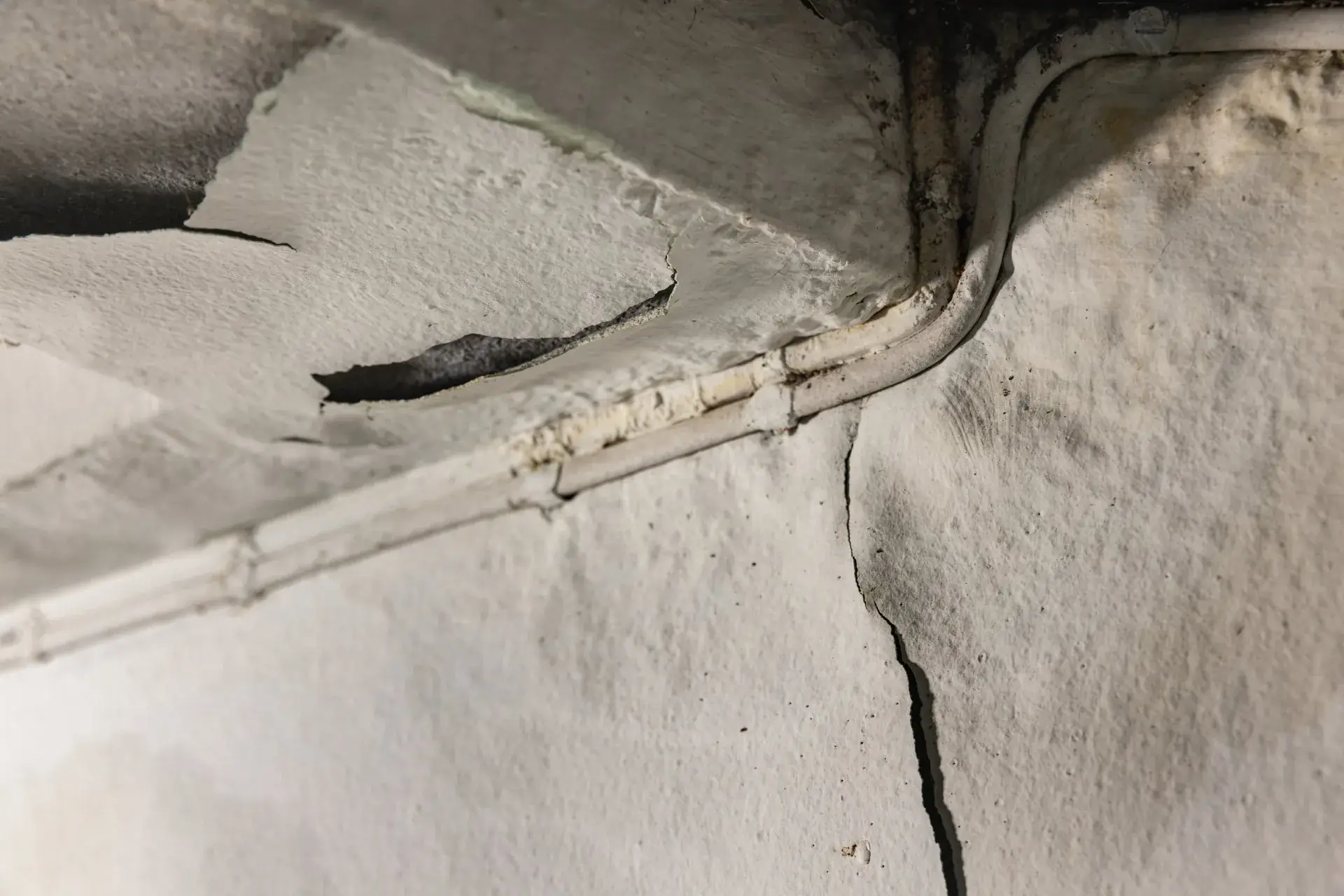
New hairline cracks in grout, drywall corners, or the garage floor can be ordinary settling. They can also be soil shifting over a leak. The timing is what makes them worth mentioning.
Flooring that cups or smells musty
Laminate that curls at the edges, wood that buckles, carpet tack strip that smells like a wet dog. By this stage water has been under the slab a while and has found a way up.
A hiss in a quiet house
Pressurized water escaping under concrete is audible, especially after midnight. Put an ear close to the floor along interior walls, where the lines tend to run toward fixtures.
From suspicion to sealed
- 01
Confirm, then isolate
Hot and cold are shut off separately and each is held under pressure on a gauge. That establishes whether there’s a leak and which side it’s on before anyone touches the floor. It’s the same leak detection sequence we use everywhere, tuned for concrete.
- 02
Pinpointed through the slab
Ground microphones and a thermal camera narrow the location to roughly a foot. Caliche and decomposed granite can bend sound, so acoustics never get the final word on their own. You get photos of what we found and where.
- 03
Two prices, side by side
Spot repair: open the floor at one point, fix the pipe, patch the concrete. Reroute: abandon the failed line and run new pipe through the attic and walls. Both are quoted flat. The reroute often wins once tile replacement is counted, and it can’t fail at that spot again.
- 04
The work, done tidy
A spot repair is a small opening, the fix, a pressure test, and a concrete patch. A reroute is new PEX run overhead with the drywall access closed afterward. Either way, the line holds pressure before we call it finished.
- 05
If this is the third one, a different conversation
Repeated slab leaks on one system usually mean the whole run is wearing out. At that point repiping the house may cost less than the next two repairs, and we raise it on the first visit rather than the fourth.
Typical range
$1,200 – $6,000
A single, easy-to-reach spot repair sits near the bottom. A full hot-side reroute in a large house sits near the top. Locating the leak runs a few hundred dollars and is credited to the repair. Flooring replacement is quoted separately, and financing is available on the larger jobs.
Financing is available on larger jobsConcrete keeps a secret well. It keeps it right up until the floor starts to move.
Slab Leaks: questions we get asked
Straight answers, the same ones we give on the phone.