Drain Cleaning in Phoenix & Scottsdale, priced before we start.
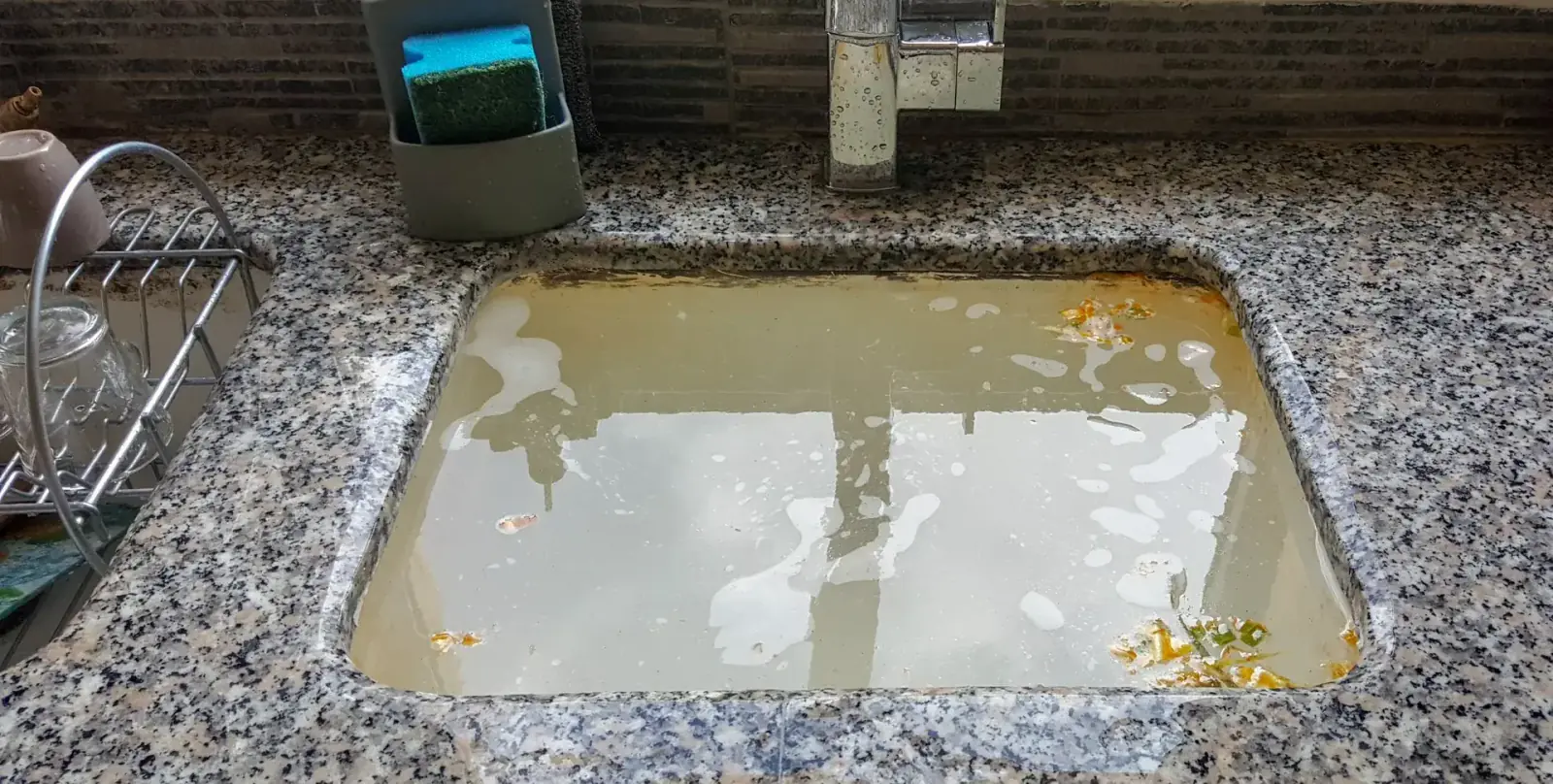
Sunday, a little after four. The dishwasher starts its drain cycle and the left side of the kitchen sink, the one without the disposal, fills with gray water and a few grains of rice nobody remembers cooking. It drains eventually, with a gulp. By Thursday it doesn’t drain at all. That is how most kitchen lines give out: not in a moment but over a season, as grease cools on the pipe wall and catches whatever comes down next.
Every drain in a house is a gravity pipe. There is no pump and no pressure behind it, only a gentle downhill run and whatever you send along. Kitchen fat is liquid at the sink and a paste a few feet later, once the water carrying it has cooled. Bathroom lines collect hair bound up in soap. Valley water adds its own contribution: minerals settle out as scale inside older cast-iron and galvanized drains, roughening the wall so everything else has something to grab.
Slab construction adds a wrinkle. Nearly every house here sits on a concrete pad, so the drains run through and beneath it, out of sight and out of reach. The only ways in are the cleanouts, capped pipes usually near the front of the house or on an outside wall, sometimes buried under a decade of decorative gravel. Finding one is often the first job. In older neighborhoods with mature ficus and mesquite, the second job is roots, which follow moisture into the smallest gap at a joint in the sewer lateral.
You can learn a lot before calling anyone. Run the bathtub for a minute and watch the toilet beside it. If the bowl rises or bubbles, the blockage sits downstream of both, in the branch or the main. If one fixture is slow and nothing else reacts, the trouble is local, and a plunger or a cleaned-out trap may be all it needs. If you can find the outdoor cleanout, loosen its cap slowly, a quarter turn at a time. Water seeping out means the main is blocked, and the house should stop using water until it is cleared.
Waiting is free right up until it isn’t. A slow drain costs patience. A main that stops on a holiday weekend sends everything to the lowest drain in the house, usually a shower, and the cleanup bill starts at the baseboards. The cable-and-go habit doesn’t help either: a line punched open without anyone looking at it tends to close again on roughly the same schedule. That is why a line with a history gets a camera down it after it’s cleared.
How a drain tells you where the trouble is
Two fixtures on the same side of the house slow down together
One slow sink is a clog in the trap or the first few feet of pipe. A sink and a tub that share a wall slowing at the same time means the restriction is in the branch they share, farther from reach and well past a plunger.
The toilet gurgles when the washer drains
A washing machine dumps water fast. If that surge can’t get past a restriction in the main, it shoves air back up through the nearest trap, and the toilet burps. Main-line trouble often announces itself this way days before it backs up.
Back again, a month later
A clog that returns on a schedule is catching on something built into the pipe: a root at a joint, a ridge of scale, a sag that holds water. Clearing it again treats the symptom and books the next visit.
Does the other basin fill when the disposal runs?
Water rising in the second side of a double sink means the drain they share is narrowing, usually with grease and the ground-up food that the disposal handled fine and the pipe below it could not carry.
Sewer smell from a bathroom nobody uses
Every trap holds a few inches of water to block sewer gas, and a guest shower left alone through a Phoenix summer can evaporate its seal. Run the tap for a minute. If the smell stays, the vent or the drain behind it needs a look.
Water standing at the cleanout
Stop running water and call. The main is blocked, and the next place that water goes is the lowest drain inside the house.
What happens after you call
- 01
Find the stop, not the complaint
The fixture that backs up is often rooms away from the blockage. We trace which drains share which lines and work out where the water actually stops before any machine comes off the truck.
- 02
Cable or water, chosen for the pipe
A spinning cable handles most soft clogs and root tips. Where grease or scale coats the whole wall, a cable only bores a tunnel through it, and high-pressure water is the better tool. You hear which one and why before we start.
- 03
A camera, when the line has a past
A first clog in an otherwise healthy line may not need one, and we’ll say so. Repeat offenders get a recorded look inside, so you see the root or the sag yourself instead of taking anyone’s word for it.
- 04
Straight answers, including “nothing’s wrong”
Sometimes the pipe is sound and the clog was a wad of so-called flushable wipes. That is a legitimate finding and costs nothing extra to deliver. Our technicians aren’t paid on commission, so there is no reason to find more than is there.
- 05
Keeping it clear
Grease goes in a can, not the sink. A hair catcher goes on the tub. If roots are the pattern, a scheduled clearing under a maintenance plan costs less than the emergency it replaces.
What most drain calls cost
$99 – $450
The low end is a single clog cleared through a cleanout we can reach. Roof-vent access, a buried cleanout, jetting, or adding a cleanout where the house never had one pushes it toward the top. The figure is quoted flat before work begins. It doesn’t rise once agreed, and if the job turns out smaller, the price follows it down.
Financing is available on larger jobsDrains give more warning than almost anything else in a house. Most people just aren’t listening for the gurgle.
Drain Cleaning: questions we get asked
Straight answers, the same ones we give on the phone.