Whole-Home Repiping in Phoenix & Scottsdale, priced before we start.
Between roughly 1978 and 1995, builders across the Valley plumbed houses with polybutylene, a flexible gray plastic that was cheap, quick to install, and sold as the pipe of the future. It had a flaw. The disinfectants in municipal water attack the plastic and its fittings over time, and the pipe weakens from the inside while looking fine on the outside. Production stopped in the mid-1990s. A great many of those houses are still standing, and plenty of them still have the pipe.
Galvanized steel, standard in Valley homes built before about 1970, fails in a different way. It doesn’t burst so much as close. Rust and minerals build up inside until a half-inch line has the opening of a drinking straw, which is why the shower at the far end of the house loses pressure first. Copper came next and lasts longer, but it still pinholes when water chemistry or a sloppy install wears the wall thin. CPVC, the cream-colored rigid plastic in some later homes, grows brittle with age, and an attic past 130°F speeds that along.
The decision rarely arrives as a disaster. It arrives as a pattern: a pinhole in the laundry room, a slab leak eighteen months later, a burst fitting behind the kitchen sink the following summer. Each repair is reasonable on its own. Added together, they approach the price of the job you have been putting off, and they bought nothing but time. The repipe decision tool asks the questions we would ask and shows which side of that line you are on.
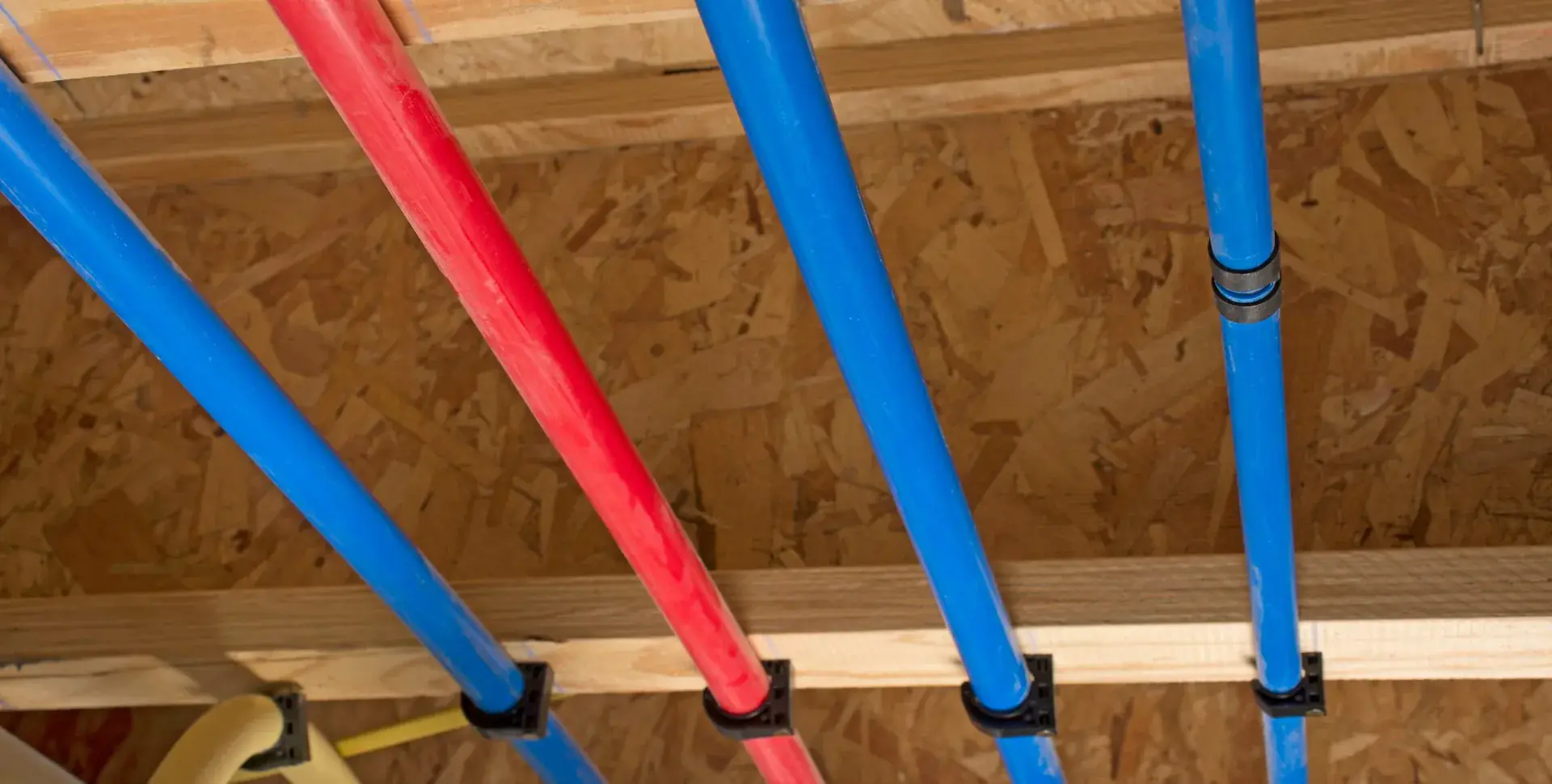
You can identify your pipe in about five minutes. Look where the supply enters the house, under the sinks, and at the water heater. Gray plastic stamped “PB2110” is polybutylene. Dull gray metal with threaded joints is galvanized. Copper looks like copper. Rigid cream or off-white plastic is usually CPVC. Flexible red, blue, or white tubing is PEX, and you can probably stop reading. A mix of several is its own clue: someone has already been replacing sections, one emergency at a time.
Waiting has a cost beyond the repairs. Every leak on a failing system brings a service call, a drywall patch, and sometimes new flooring. Some insurers ask about polybutylene before writing a policy, and buyers’ inspectors flag it by name. The failure you are waiting for won’t pick a convenient moment, either. A repipe gets scheduled. A burst fitting at 2 a.m. does not.
When patching stops making sense
Gray pipe stamped PB2110
That’s polybutylene. It turns up in Valley neighborhoods built through the eighties and early nineties, from Mesa to Ahwatukee Foothills. It fails at the fittings, without warning, and it isn’t getting any younger.
Pressure that fades with distance
Strong at the kitchen, feeble at the back bathroom. When the street supply is fine and the far fixtures are starving, the pipe has narrowed from the inside.
Rust-colored first draw
Tinted water that clears after a few seconds is galvanized pipe shedding its lining. It’s cosmetic, right up until the day a joint rusts through.
A second leak under the slab
One under-slab pinhole can be bad luck. Two means the conditions behind the first exist along the whole run. Another spot repair will stop the leak; it won’t stop the pattern.
Yellowed plastic that snaps when bumped
Aging CPVC turns brittle, and attic heat hurries it. The usual warning is a fitting that cracks during some unrelated repair.
Three repairs, two years, one system
Add up the invoices. If the total is a real fraction of a repipe quote, the math has already made the decision and is waiting for you to notice.
A repipe, start to finish
- 01
The map comes first
We trace every supply run, fixture, and access point, then plan where each new line will travel, mostly through the attic and down interior walls. How many drywall openings there are, and where, is decided here rather than improvised later.
- 02
Floors and furniture covered
Drop cloths, plastic sheeting, and a work zone that moves room by room. You live in the house throughout.
- 03
New lines in, old lines retired
PEX or copper, your choice, with the trade-offs laid out plainly. New pipe runs to each fixture, and the old system is disconnected and left in place wherever pulling it out would mean opening more wall than it’s worth. Water is off a few hours during the workday and back on every night.
- 04
Tested, then inspected
Every joint holds pressure before a wall is closed. Where the city requires a permit, it’s pulled and the work is inspected. We photograph the new runs before they disappear, so you have a record of what’s behind the drywall.
- 05
Drywall patched and textured
Openings are closed, textured to match, and left ready for paint. The house should look like a house again, not a list of holes.
What a repipe typically runs
$4,000 – $15,000
A single-story, three-bathroom home in PEX sits toward the low end. Two stories, four or more bathrooms, copper throughout, or a tight attic moves it up. The price is fixed once agreed. Financing is available, and on a job this size a lot of people use it.
Financing is available on larger jobsNobody enjoys the week of a repipe. A lot of people enjoy the decade after it.
Repiping: questions we get asked
Straight answers, the same ones we give on the phone.