Commercial & Office Slab Leak Repair in Phoenix & Scottsdale, priced before we start.
The call usually comes from a property manager, and it usually starts with carpet. A tenant in suite 140 noticed the tiles by the copy room feel warm. Or damp. Or both, and now there is a smell. By the time anyone phones a plumber, the water bill has been creeping for three cycles and the tenant has read the lease twice.
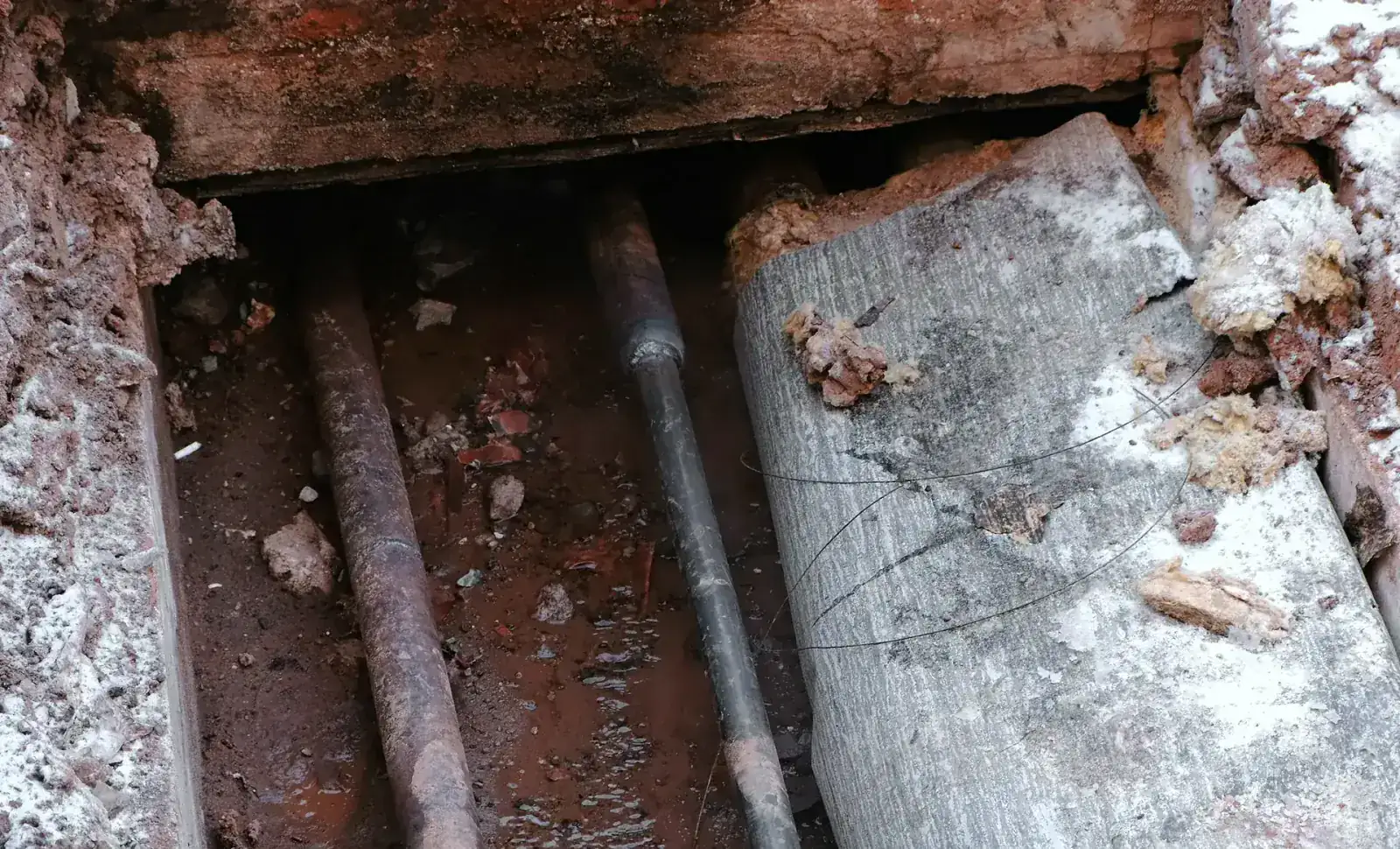
Nearly every commercial building in the Valley sits on a concrete slab, with supply lines running through or beneath it. Those lines fail for dull reasons: hard water thinning copper from the inside, pipe rubbing against rebar or gravel as the building heats and cools, soil movement in the expansive clays found in parts of the Valley. The leak itself is small. The water finds the easiest path, which is sideways, under finished flooring, into the neighbor’s space. On a large floor plate it can travel a surprising distance before it surfaces, which is why the damp carpet is rarely sitting on top of the leak.
In a house, the standard fix is to open the floor at the leak and repair it. In an occupied commercial building that is often the worst option available, because a jackhammer in a dental office is a closed dental office. So the work is planned backward from the constraint. Locate the leak precisely, then ask whether a reroute through ceilings and walls can abandon the failed run and leave the floor alone. Often it can, and once floor restoration and lost business days are priced in, it is frequently the cheaper route too.
Multi-tenant buildings add a second question, and it can be louder than the first: whose leak is it? We document the line, its location, and where it sits relative to the suite boundaries, in writing and on video. We don’t interpret leases. We make sure the facts aren’t the part anyone argues about.
Waiting has a cost that compounds quietly. The Field Report explains how water line leaks become slab damage, and the hidden leak cost calculator will put a number on the water alone. The water is usually the smallest line on the eventual bill. Flooring, tenant disruption, and the argument come after it.
What points to a leak under the slab
Consumption stepped up for no reason
Commercial meters make this easier to spot. A jump with no change in occupancy, hours, or equipment is water leaving the system somewhere.
Warm flooring in one defined patch
A hot-water line leaking under slab heats the floor above it. On a large floor plate, the patch may be a few square feet beside a filing cabinet.
White stains or lifting at the edges of flooring
Moisture wicking up through concrete leaves mineral deposits and loosens adhesive. Check the edges of vinyl plank and the seams of carpet tile.
One zone losing pressure
In buildings valved by suite or floor, low pressure confined to one area narrows the search considerably.
A water heater that never seems to rest
A heater cycling while no hot water is in use is heating water that is leaking out somewhere downstream.
Running water with every fixture closed
Late in the evening, in a quiet building, a hiss behind a wall or under the floor deserves a second listen.
How we work in occupied buildings
- 01
Isolation, zone by zone
Closing valves by riser, floor, or suite narrows the leak to one area before detection gear comes in. Leak detection and camera inspection take it from there.
- 02
Acoustic and thermal location
Listening equipment hears pressurized water through concrete; thermal imaging finds the heat from a hot-line leak. Precision here decides how much of your building gets opened.
- 03
Spot repair or reroute, compared on paper
You see both options with flat prices, how long each takes, and what each disturbs. When the whole system is failing, a phased commercial repipe may be the honest recommendation.
- 04
Staged into your windows
Nights, weekends, or one suite at a time. A written scope and sequence goes to building management early enough to notify tenants accurately.
- 05
Tested and documented before we leave
The repaired or rerouted line is pressure-tested, and you receive photos and a written record of what was done and where.
What it typically runs
$1,800 – $12,000
A single accessible spot repair lands near the low end. Multi-zone reroutes in occupied buildings, or work that needs night crews, run higher. The price is set before work begins and doesn’t move once agreed. Financing is available on larger jobs.
Financing is available on larger jobsThe pipe under the floor is a few feet of copper. The floor on top of it is somebody’s business, and the plan should treat it that way.
Slab Leak Repair: questions we get asked
Straight answers, the same ones we give on the phone.