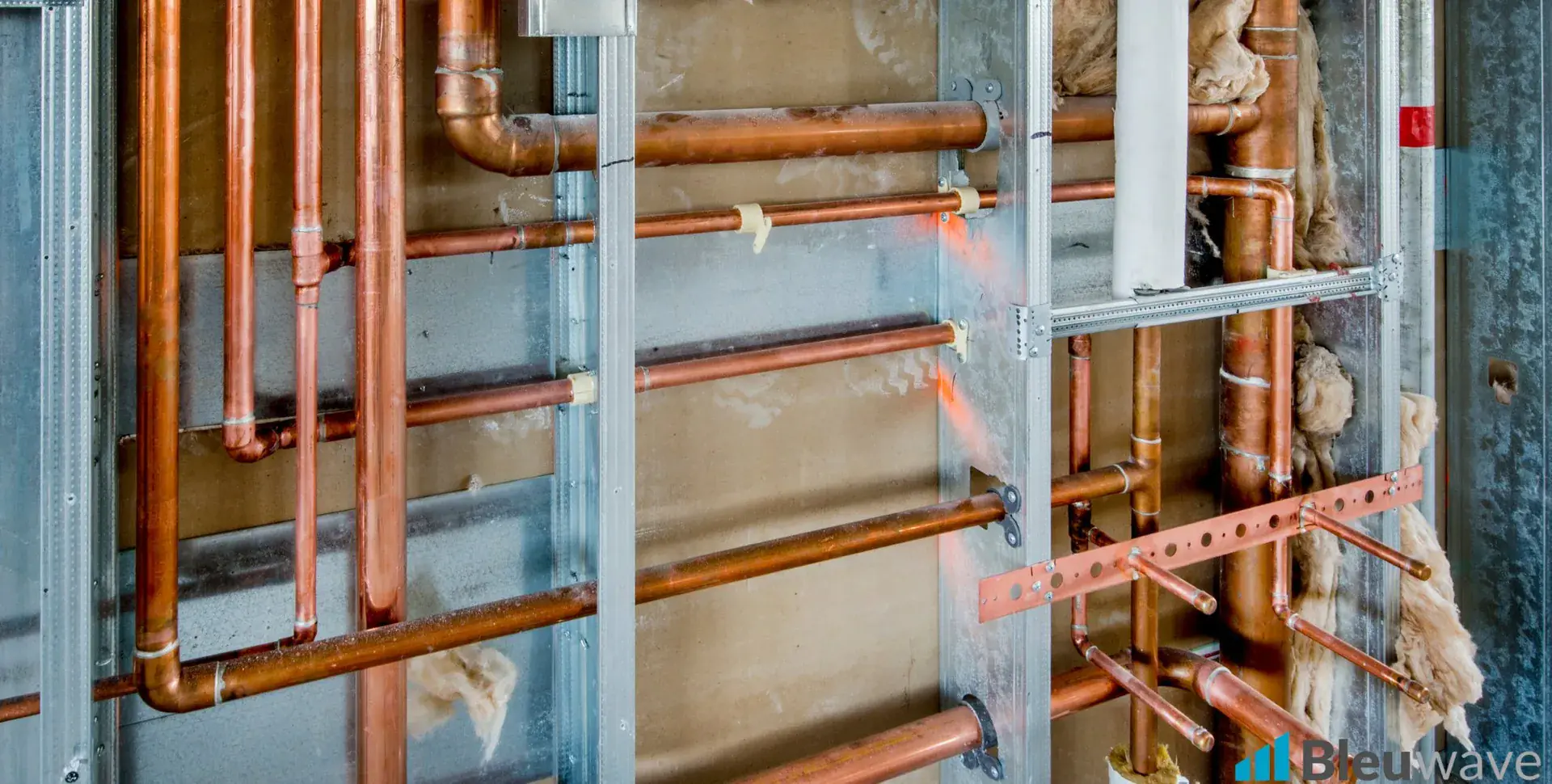
Commercial Repipe in Phoenix & Scottsdale, priced before we start.
Most commercial repipes should not happen all at once. The instinct is to rip the whole system out over a long weekend and be done with it, and on paper that looks efficient. In practice it means every tenant without water at the same moment, every wall opened at once, and a schedule with no slack when the inspector can’t come until Tuesday.
Phasing solves most of that. The first step is usually unglamorous: install new isolation valves so each riser, floor, or suite can be shut off without affecting its neighbors. After that, the building can be repiped a section at a time, with water off for hours in one area instead of days for everyone. Tenants get notice. Restaurants get their overnight window. The dental office keeps its Fridays. If an inspection slips, one section waits instead of the whole building.
The question underneath is whether you need a repipe at all, and it deserves a straight answer. Valley buildings tend to fail by era. Galvanized steel in pre-1970 construction rusts closed from the inside, so pressure fades year by year. Polybutylene, common in buildings from roughly 1978 to 1995, turns brittle and lets go at the fittings with little warning. Copper after that holds up better but can pinhole, and 10 to 20 grains per gallon of hardness does it no favors. One leak is a repair. A pattern of leaks on the same material is the system telling you something.
The repipe decision tool walks through the variables, and the Field Report piece on when patching stops paying lays out the arithmetic. The short version: when the yearly cost of repairs, lost water, and disruption starts approaching the yearly cost of new pipe, you are paying for a repipe either way. Only one of those payment plans ends.
Before anything is quoted, we look. Pipe material, age, access, the number of risers and fixture groups, and how the building is occupied all change the scope. You get the phases, what each one disturbs, and a flat price for each, so ownership can budget phase by phase or finance the larger scope. And if the honest answer is that your building needs two repairs and another five years of watching, that is the answer you’ll get.
When patching has stopped paying
The third leak this year on the same pipe
One leak can be bad luck. Three on galvanized or polybutylene is a trend, and the next one is already forming.
Pressure that fades toward the top floor
Rust and scale narrowing old galvanized pipe show up first where pressure is already lowest.
Brown water on Monday morning
Rusty water in the first draw after a weekend or holiday means corroding steel pipe somewhere in the building.
Gray plastic supply lines stamped PB
That is polybutylene. If it is still carrying water in your building, it is on borrowed time.
Stained ceiling tiles in a cluster
Pinhole leaks in copper above a drop ceiling stain the tiles before anyone sees water. A cluster of stains is a map.
A sale or refinance on the horizon
Buyers and lenders ask about plumbing. A documented repipe answers the question; a list of patches raises new ones.
How a phased repipe runs
- 01
Survey and camera
Materials confirmed, risers and valves mapped, and the condition of the existing system documented before anything is recommended.
- 02
Valves go in first
New isolation valves let each phase shut down on its own, and they stay useful for every repair the building will ever need.
- 03
A phase plan tenants can read
Written sequence, dates, and water-off windows for each area, ready to hand to building management for notices.
- 04
New pipe, one section at a time
Copper or PEX as the building and code call for, run along the most accessible path, with wall and ceiling openings kept as small as the work allows.
- 05
Tested, inspected, recorded
Each phase is pressure-tested and inspected where a permit applies. You receive photos and a record of what was replaced and where it runs.
How it’s priced
Quoted flat, before we start
Scope is driven by the number of risers and fixture groups, the pipe material coming out, access through ceilings and walls, whether work has to happen after hours, and permit requirements. Each phase is priced on its own, so you can schedule and budget one at a time.
Financing is available on larger jobsA building can be patched more or less forever. The trouble is that it keeps sending the invoices.
Repipe: questions we get asked
Straight answers, the same ones we give on the phone.