Leak Detection & Repair in Phoenix & Scottsdale, priced before we start.
A leak of one gallon an hour sounds like nothing. It is 24 gallons a day and 8,760 a year, delivered to the inside of a wall or the soil under a floor, where nobody is watching. Most hidden leaks start smaller than that and grow. The water bill tends to notice before you do, and in a city where summer irrigation already swings the bill up and down, even the bill can hide one for a season.
Where the water goes depends on where the pipe runs. In most Valley homes, supply lines take one of three routes: under the concrete, up through the walls, or across the attic, where July cooks everything above the ceiling past 130°F. A slab leak soaks the ground beneath the floor. A wall leak wicks into drywall and insulation. An attic leak can drip onto a ceiling for weeks, drying almost as fast as it arrives, until the texture yellows or the drywall starts to sag.
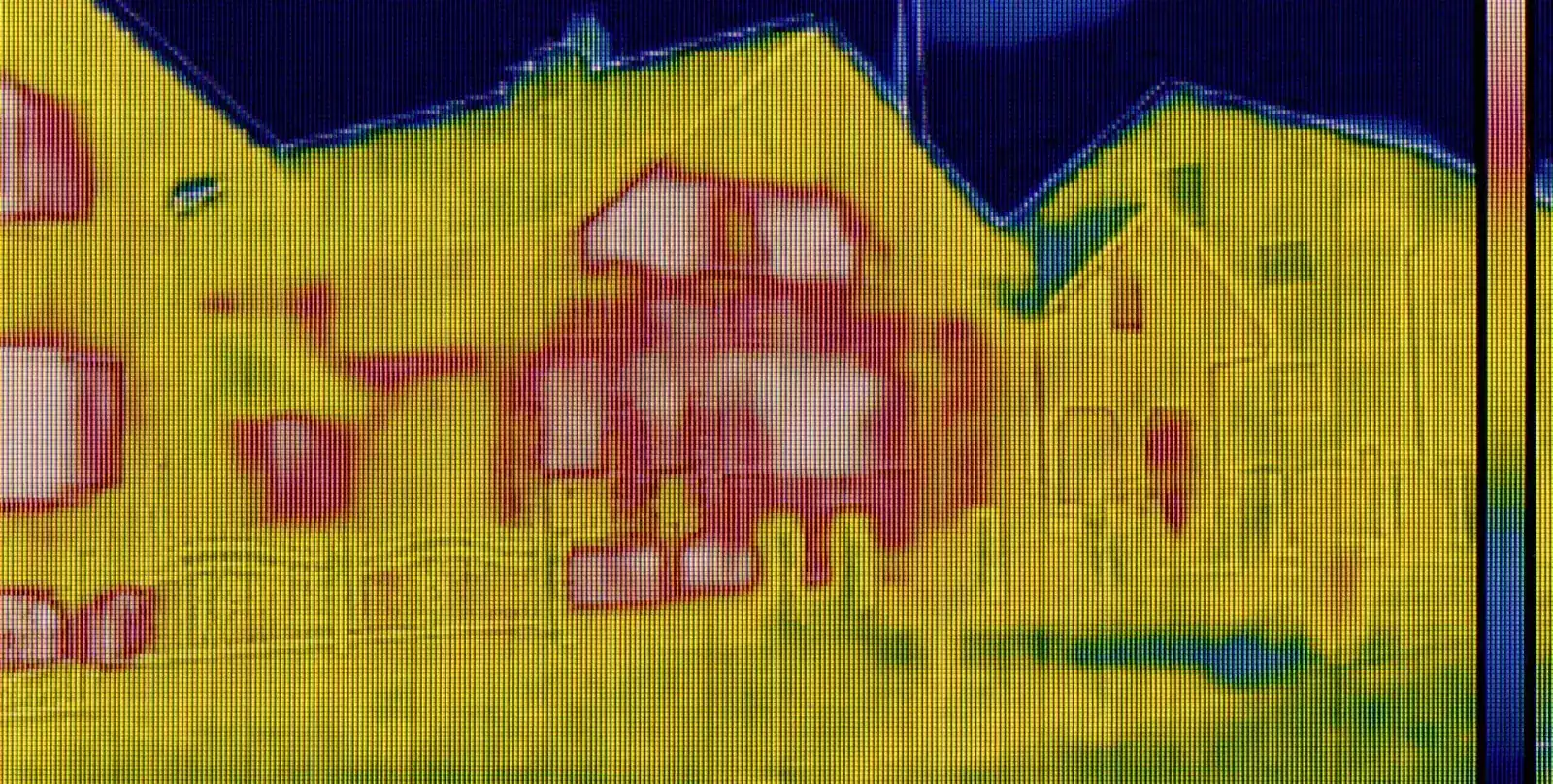
The traditional method is exploratory surgery. Cut a hole where the stain is, find nothing, cut another a few feet over. It does find water eventually, and it leaves you paying a drywall crew for three holes that proved only where the leak was not. We measure instead. Hot and cold are isolated and held under pressure on a gauge. Ground microphones listen for the hiss of escaping water. A thermal camera reads the surface for heat or evaporative cooling. Each test narrows the search, and together they usually land within a foot or so.
You can run the first test yourself tonight. Turn off every fixture, the irrigation controller, the ice maker, and the pool auto-fill. Find the meter, usually in a box near the curb, and watch the small low-flow dial, often a triangle or a star. If it turns, water is leaving the property. Close the main valve at the house and watch again: if the dial stops, the leak is inside; if it keeps turning, look at the service line and the irrigation. The hidden-leak calculator will put a monthly price on whatever you find.
The water is the cheap part of waiting. Drywall that stays damp for more than a day or two is where mold gets started. Water under a slab softens the soil the slab rests on. And a pinhole rarely stays a pinhole, because the stream coming out of it erodes the pipe around the opening. Finding a leak now costs less than finding it later, which may be the least surprising sentence on this page.
Clues worth chasing
The meter dial turns while the house sleeps
The most reliable test there is, and it needs no tools. Everything off, including the sprinklers and the pool fill, then watch the low-flow indicator for 10 minutes. Any movement is water leaving somewhere.
A bill that’s up on last year, not last month
Compare the same month a year apart. Month-to-month comparisons mean little in a desert where the irrigation runs far longer in June than in January.
Why does the hallway smell like a basement?
Phoenix houses don’t have basements, so that damp, earthy smell is coming from somewhere else. Usually it’s wet drywall, insulation, or carpet pad sitting on a leak you haven’t seen yet.
Ceiling stains that return after paint
A stain that comes back is active; one that stays gone was historic. Attic supply lines and air-conditioner condensate lines are the usual suspects, and they’re easy to tell apart once someone looks.
The water heater fires at 3 a.m.
If the burner or elements kick on with the whole house asleep, hot water is draining away somewhere and the heater is replacing it. That clue points straight at the hot side.
Pool level falling faster than the neighbors’
Summer evaporation takes a real bite, but a pool that needs the auto-fill every day may be losing water through its lines. A bucket test separates evaporation from a leak, and pool plumbing repairs the underground runs.
Four instruments, one opening
- 01
Isolation and a pressure test
Hot and cold are separated and each is held under pressure on a gauge. A falling needle confirms the leak and tells us which side it’s on. If both hold, the problem is likely outdoors, and that’s where we go next.
- 02
Then we listen
Water forced through a small opening makes a hiss that carries through concrete, soil, and drywall. Ground microphones find where that sound is loudest, which is generally where the pipe is broken.
- 03
A thermal pass to confirm
Hot-line leaks warm the surface above them, and cold-line leaks often show as a cool, damp patch. The camera turns a rough listening zone into a spot you can mark with tape. We photograph the readings so you see what we saw.
- 04
Open once, repair, prove it
We cut the smallest opening that lets us work properly, fix the line, and pressure-test it again before closing up. Most finds end in a straightforward pipe repair. If the pipe beside the leak looks like the next leak, you’ll hear that too, including whether it can wait.
What locating a leak runs
$225 – $650 to locate
The price follows the size of the search: one suspect wall sits low, a whole house plus yard and pool sits high. The locate fee is credited against the repair if we do the work, and the repair is quoted flat before anything is cut.
Financing is available on larger jobsWater always ends up somewhere. The point is to learn where before the house tells you.
Leak Detection: questions we get asked
Straight answers, the same ones we give on the phone.