
Water heaters & tankless · Phoenix metro
Water heater replacement and tankless upgrades, on a weekday you pick.
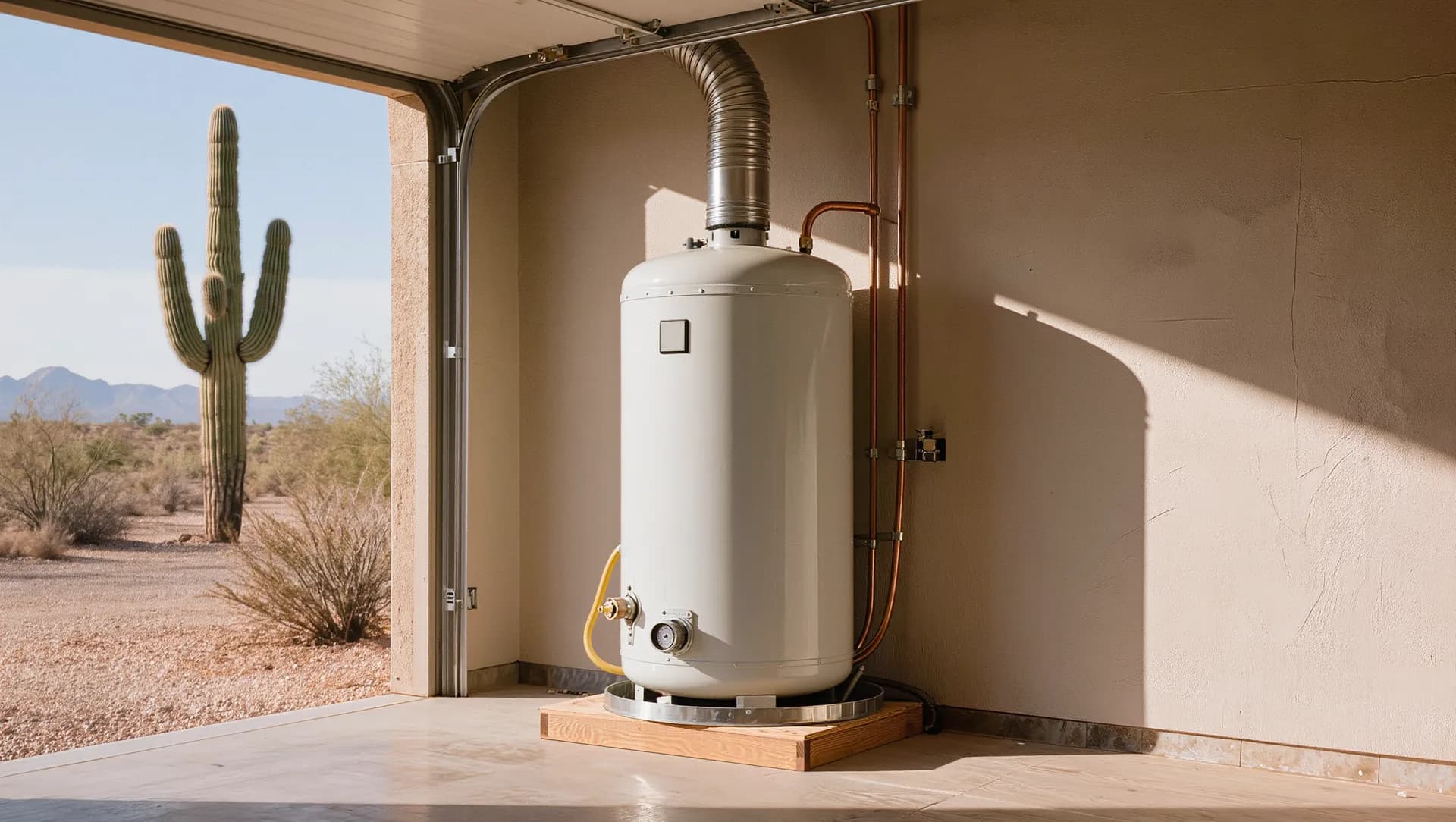
A Phoenix tank lasts 8 to 12 years. Replaced on a day you choose, it is a two-to-three-hour job. Left to choose its own day, it brings 40 or 50 gallons of water along, and it never chooses a convenient one.
- Tank or tankless, supplied and installed, permit included
- Sized to how your household actually uses hot water, not to the old tank
- A flat price you approve before we disconnect anything
Current offer · tank or tankless
$150 off a water heater replacement
Applies to full replacement, not repair. Cannot be combined with financing promotional rates.
Veteran owned · Licensed, insured & bonded · ROC #340524
- LicensedROC #340524
- InsuredFully covered
- BondedWork guaranteed
- Veteran Owned& Operated
- 24/7 ServiceEvery day
- Upfront PricingFlat rate
Replace, upgrade, install
Three ways to stop thinking about the water heater for a decade.
Replacement
A new tank where the old one stood
Two to three hours on site. Permit, expansion tank, strapping, drip pan and proper venting come with it, and the old tank leaves in our truck instead of your recycling bin.
Often the same day, when you call early.
Upgrade
From a tank to tankless
No tank to rust through. Hot water that doesn’t run out at its rated flow. It usually wants a bigger gas line and new venting, and you hear about all of it before the quote, not halfway through the install.
Typically pays back over 8 to 15 years.
New installation
A remodel, an addition, a second unit
Sized on paper first: how many fixtures, how many run at once, and how cold the water arrives in January. The flow rate picks the unit. Brand loyalty can wait its turn.
Gas and venting work permitted and inspected.
And when it only needs a repair, that is what you’ll be quoted. Most repairs land between $180 and $600. A younger tank with one failed part gets the part, not a sales pitch.
Tank water heaters
The familiar one: 40 or 50 gallons, kept hot around the clock.
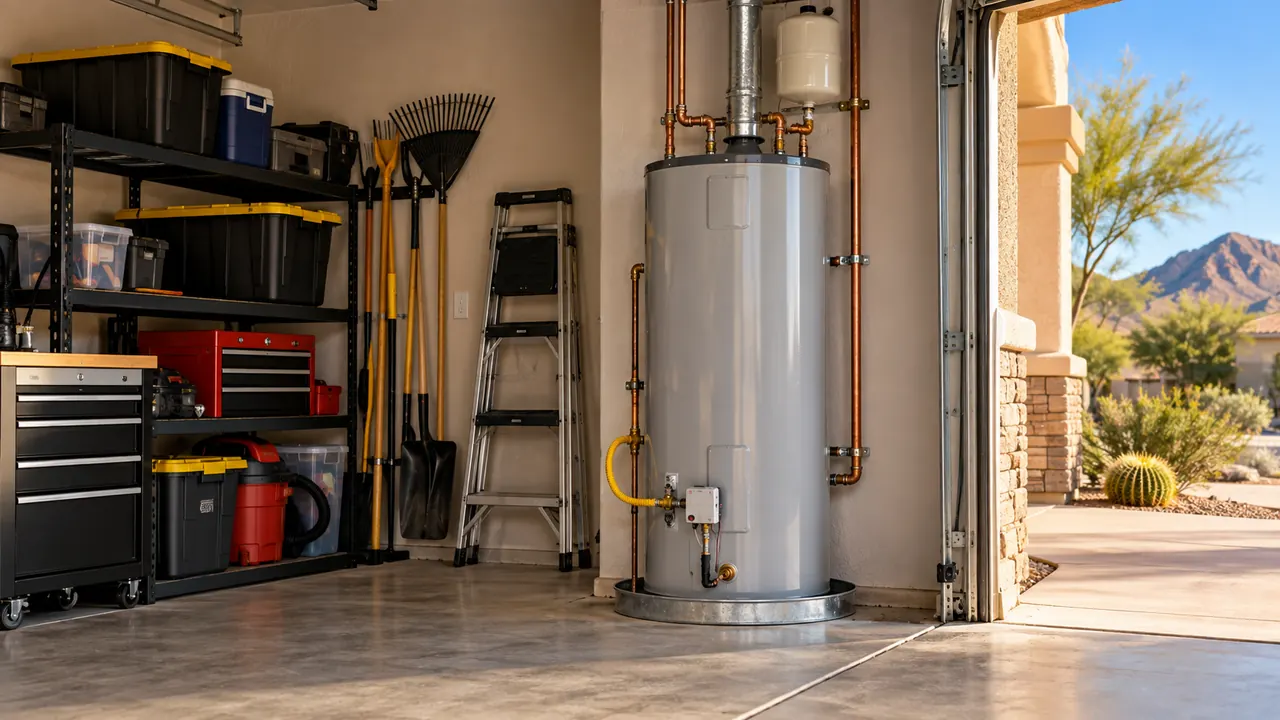
A steel cylinder with a glass lining and a stick of magnesium inside, the anode, that corrodes so the tank doesn’t. It costs less to install, runs on the gas line and venting you already have, and it is the right answer more often than anyone selling tankless will tell you.
- Typically lasts 8 to 12 years in Phoenix water
- A standard replacement takes two to three hours
- Sized by household, bathroom count and whether two showers run at once
- Permit, expansion tank, strapping, drip pan and venting are part of the job
- The old tank is hauled away, included
- $1,200 – $3,800 installed, most homes
Tankless water heaters
The upgrade: heated as it flows, nothing stored.
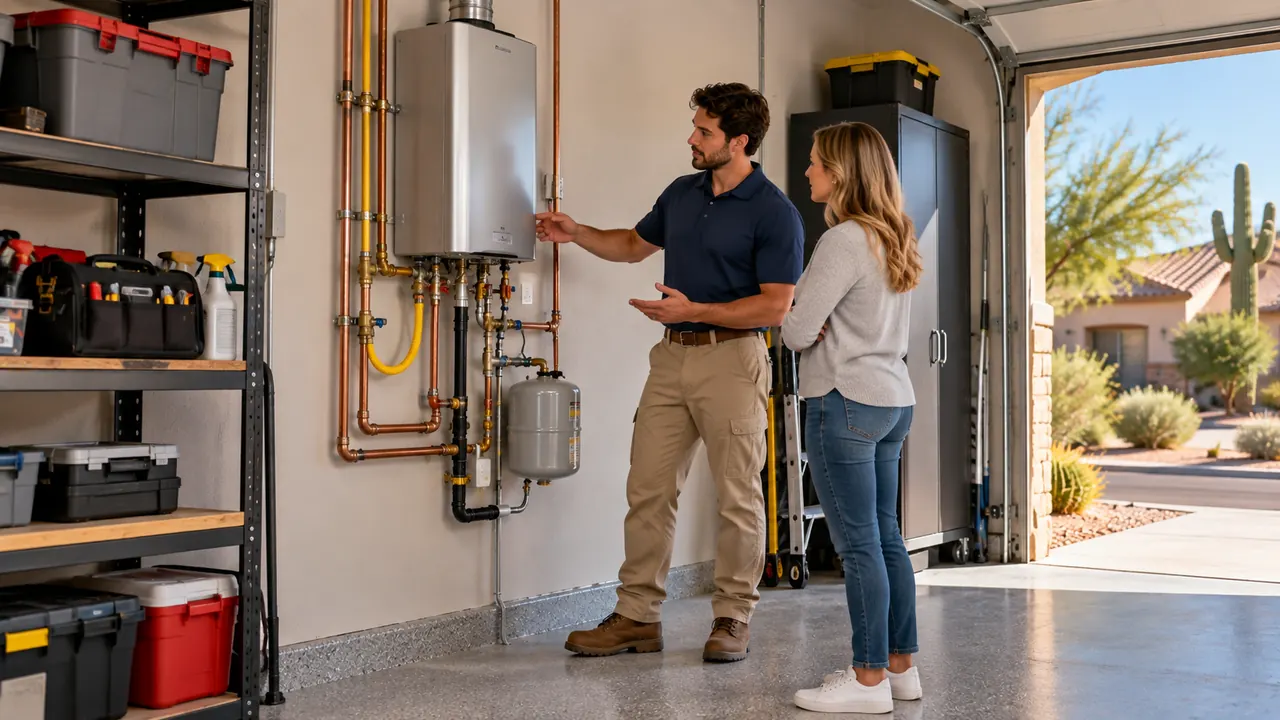
“Endless hot water,” says the brochure, and it is true in a narrow sense. A tankless unit fires when a tap opens and quits when it closes, so there is no tank to rust through and no 50 gallons waiting for a chance at the floor. In return it asks for the right gas line, the right vent, and one chore a year.
- Typically pays back over 8 to 15 years, depending on gas rate and usage
- Well-maintained units commonly last 20 years or more
- Most gas conversions need a larger supply line, new venting and an outlet
- Service valves on every install, so a descale is a short visit
- Plan on a descale once a year in untreated Valley water
- Quoted flat, before we start
Common failure signs
A tank gives years of quiet warning, then fails in an afternoon.
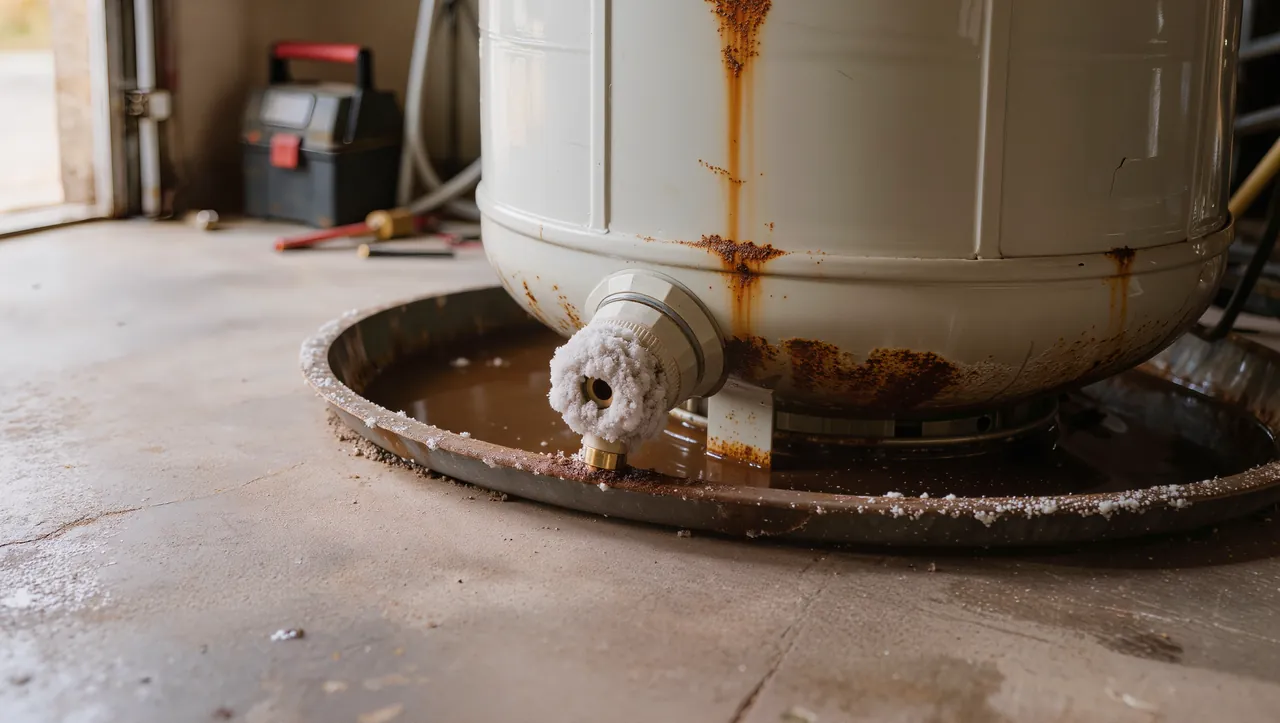
It doesn’t wear out evenly. It rusts through at a weld or a seam, from the inside, and the supply line keeps refilling it until somebody closes the valve. In a garage, that’s a mess. In an attic, it’s a ceiling. Here is what it does first.
The serial number says it is past ten
The age is printed on the label, in code. Most people guess it, and most guess low. Age alone isn’t a failure. It is a forecast.
Rusty water, but only from the hot side
The steel inside is corroding. No part fixes that. Plan the replacement while you still get to plan it.
Popping and rumbling while it heats
Water flashing to steam under a crust of sediment on the tank floor. It wastes gas and overheats the steel, and it is not trying to tell you a joke.
Moisture anywhere near the base
Treat it as a tank leak until proven otherwise. Sometimes it is a fitting or the relief valve, both fixable. Sometimes it is the tank, which is not.
Showers go lukewarm sooner than they used to
Either minerals now fill the space water used to, or a dip tube or element has failed. One is age. The other is a repair. A test tells them apart.
A pilot that won’t stay lit
Usually a thermocouple or a dirty burner. A modest repair in a tank with years left. Money thrown after a tank that has none.
Replacement considerations
Six questions decide what goes in its place. Answer them before the tank does.
A heater that has already failed makes the decision for you, on a deadline, with cold water. Deadlines make for bad arithmetic. Decide while the old tank still works and you can price both kinds side by side, calmly.
- 01
How long you plan to stay
Tankless pays back over 8 to 15 years. Staying a decade tilts the math toward it. Selling in three tilts it right back.
- 02
How much hot water, all at once
Household size, bathroom count and whether two showers run together decide capacity. Sometimes the right heater is smaller than the one you had.
- 03
Gas or electric
Usually whichever the house already has. Switching fuels means new gas or electrical work, and a tank rarely earns that back.
- 04
Where it lives
A garage forgives a leak. An attic or a hall closet does not. Where a failed tank would mean ceilings and flooring, a wall-hung tankless unit holds very little water to lose.
- 05
The gas line and the vent
A typical tank runs happily on a half-inch line. A whole-house gas tankless usually wants more fuel than that pipe can carry.
- 06
The water itself
Valley water is hard. A softener ahead of the new heater helps it outlast the old one, and stretches the time between tankless descalings.
How an installation goes
Two to three hours. Then a buyer’s inspector finds nothing to write down.
- 01
A look before a quote
Age, anode, sediment, burner or elements, relief valve, venting. We test before we recommend, and a six-year-old tank with a bad thermocouple gets a thermocouple.
- 02
Sized to how you live
Like for like is a habit, not a method. For tankless, the sizing happens on paper first: fixtures, peak use, and the temperature of January’s water.
- 03
A flat price, then the swap
You approve a figure before we disconnect anything, and the price holds even if the old tank puts up a fight on the way out.
- 04
The code items nobody sees
Permit, expansion tank, strapping, drip pan, correct venting and a relief-valve line that drains where it should. A buyer’s inspector will one day look for every one of them.
Installed, most homes
$1,200 – $3,800 installed, approved before we start.
- A like-for-like tank swap with easy access sits at the bottom of the range
- Attic or tight-closet installs, and gas line or venting corrections, move it up
- A tankless conversion is quoted flat before we start: gas line, venting and recirculation move it most
Hauling the old tank away is included; a dead 50-gallon tank weighs more than it looks. Financing is available on replacements and installations, with rates and terms set by the lender and subject to approval.
Current offer
$150 off a water heater replacement
Tank or tankless, supplied and installed, permit included. Applies to full replacement, not repair. Cannot be combined with financing promotional rates.
Or send the details and get a flat quote“Josh & Chris arrived on time to flush my water heater. They did an outstanding job. They also went out of their way to fix some projects that I needed to get done. They went above and beyond and were very pleasant to work with my needs.”
Before you book
What homeowners ask while the old one is still dripping
Can you replace it today?
Tank or tankless for my house?
Can one tankless unit supply the whole house?
How long do water heaters last in Phoenix?
Is financing available?
What if mine only needs a repair?
Read the label. Then pick the day.
A water heater is the one appliance that tells you, in print, how old it is. Replaced on your schedule, it costs an afternoon. Left to pick its own day, it costs the afternoon and the floor.
$150 off a water heater replacement. Applies to full replacement, not repair. Cannot be combined with financing promotional rates.