
Hard water treatment · Phoenix metro
Whole-house water softening and filtration, sized from a reading at your tap, not a brochure.
Valley water commonly carries 10 to 20 grains of hardness per gallon, and your water heater, your faucets and your shower glass are keeping count. A softener takes it out where the water comes in. Filtration handles what a softener doesn’t. Reverse osmosis finishes the job at the kitchen sink.
- Hardness tested at your tap, not borrowed from a citywide average
- Whole-house systems sized to your household and plumbed at the loop
- A flat price before the work starts
Current offer
Free water hardness test
Phoenix metro. No purchase necessary, and we mean it.
Veteran owned · Licensed, insured & bonded · ROC #340524
- LicensedROC #340524
- InsuredFully covered
- BondedWork guaranteed
- Veteran Owned& Operated
- 24/7 ServiceEvery day
- Upfront PricingFlat rate
What hard water is already doing
Hard water never sends a bill. It just raises all the others.
Scale
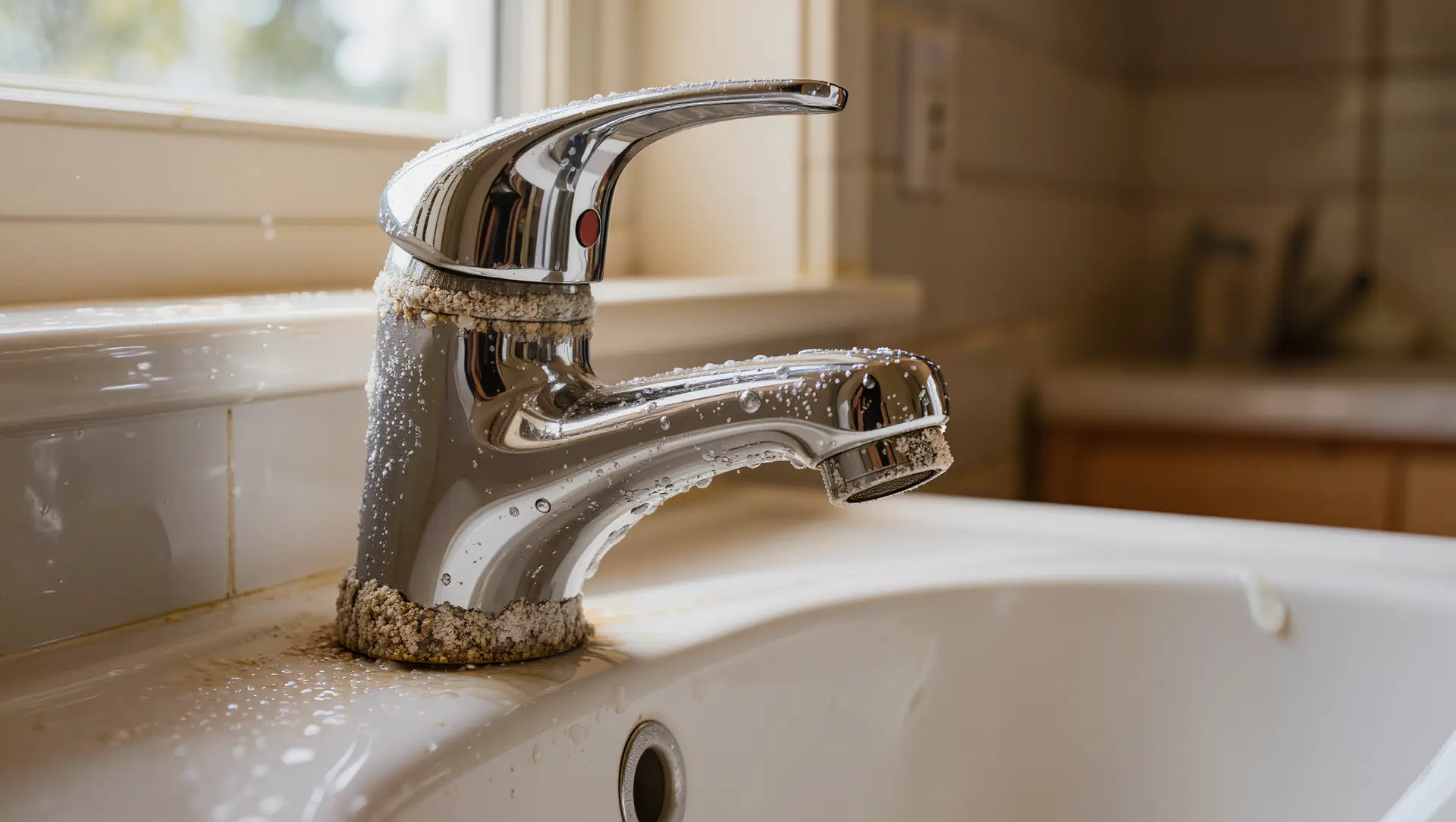
Most things dissolve better in hot water. Calcium does the opposite, which is why the heaviest scale in any house sits inside the water heater. That popping from the tank is water boiling under a crust of it.
Spots
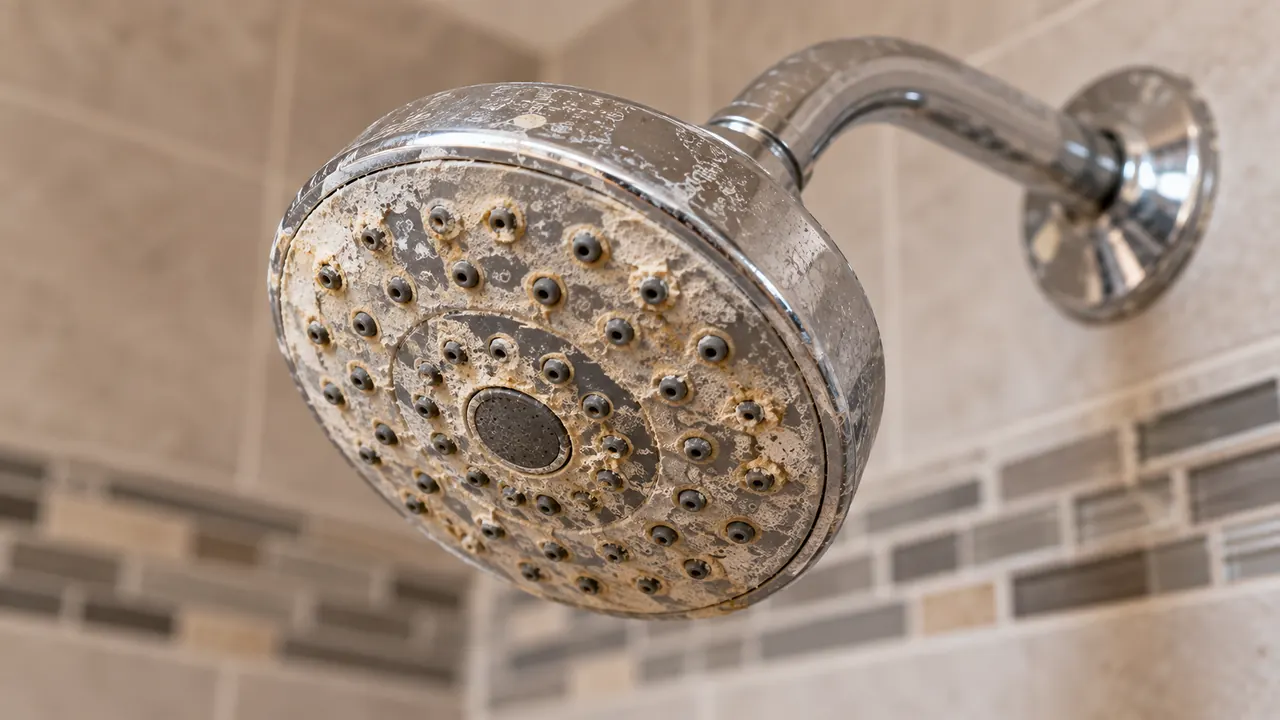
On the shower glass a week after you cleaned it. On every glass that air-dries. You can scrub them off. They can wait.
Fixture buildup
White crust on the faucets and aerators, and cartridges that seize in their bodies until a simple repair needs a new faucet.
Appliances
A water heater built for 12 years retires at 8 or 9. The dishwasher and a tankless unit pay the same tax, and the detergent vanishes at a rate the label never planned for.
Water quality
“It tastes like the pool.” Disinfectant, minerals, and in summer an earthy note from the rivers and canals. Little of it is harmful. Plenty of it is unpleasant.
Softener vs. filtration vs. reverse osmosis
Three machines, three different jobs. They are not interchangeable.
Two of them treat the whole house. One treats a single faucet. Only one stops scale. Buy the wrong one and you will own very clean, very hard water.
Water softener
Takes the hardness out at the door, before it reaches anything you paid for
- Treats
- The whole house. Hose bibs stay on untreated water.
- What it is for
- Removing calcium and magnesium, the minerals that make scale.
- What it doesn’t do
- Filter sediment, or do much for the taste.
- Where it goes
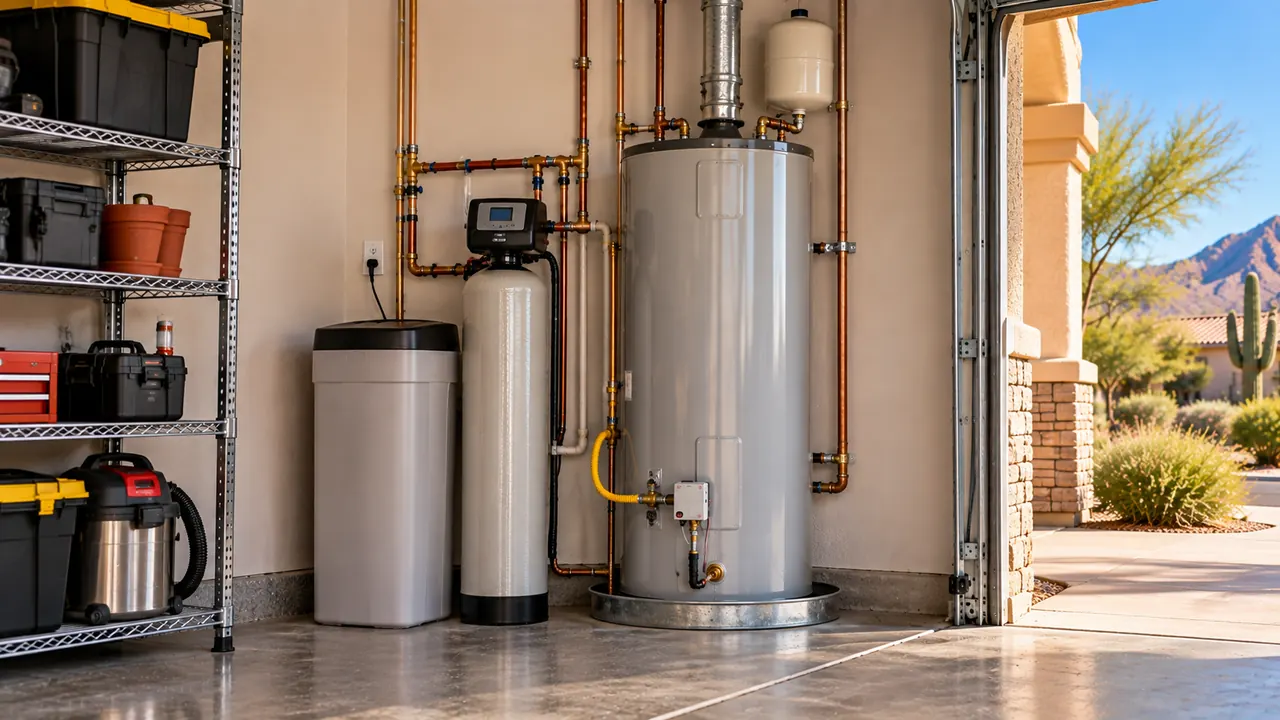
- At the softener loop in the garage, upstream of the water heater, with a bypass.
- Upkeep
- Salt. Lift the lid once a month and look.
$1,800 – $4,500 installed
Whole-house filtration
Filters every tap in the house, not just the one by the coffee maker
- Treats
- The whole house, from the main line.
- What it is for
- Sediment, and with carbon media, the chlorine taste and smell.
- What it doesn’t do
- Remove hardness. Without a softener, scale forms just the same.
- Where it goes
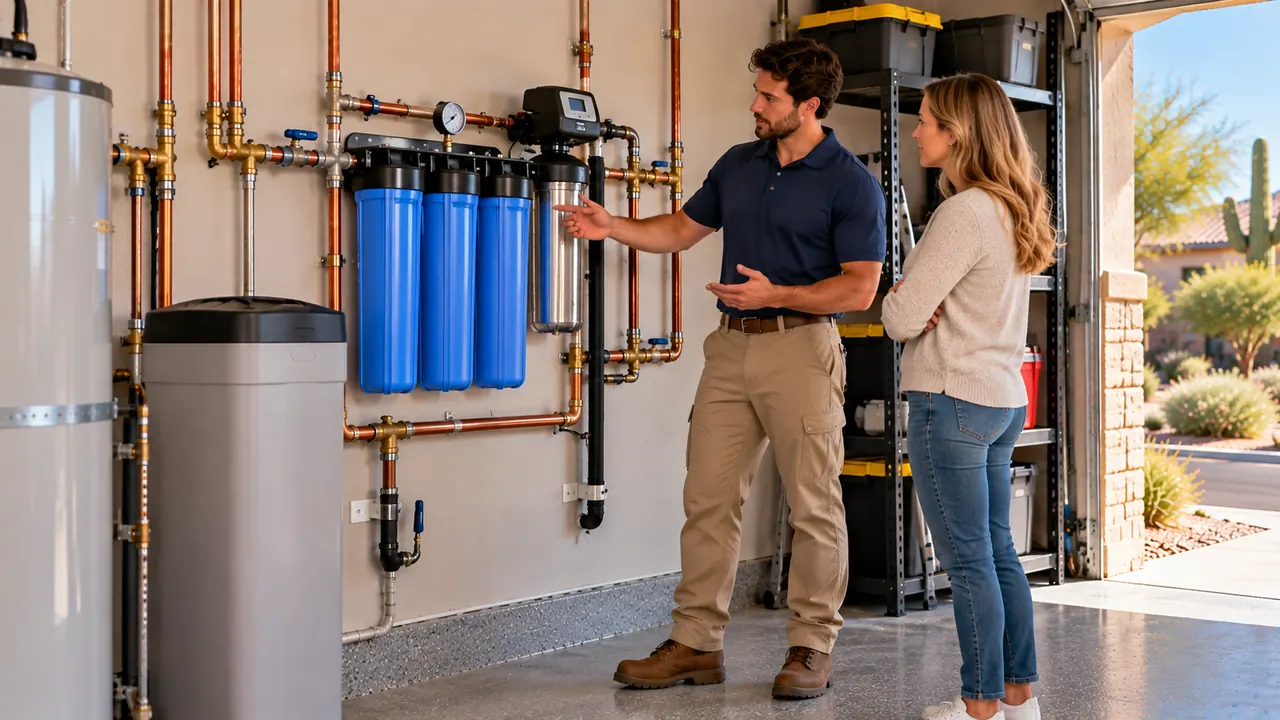
- On the main line, usually alongside the softener.
- Upkeep
- Media or cartridges replaced on the system’s own schedule.
Quoted flat, on its own or with a softener
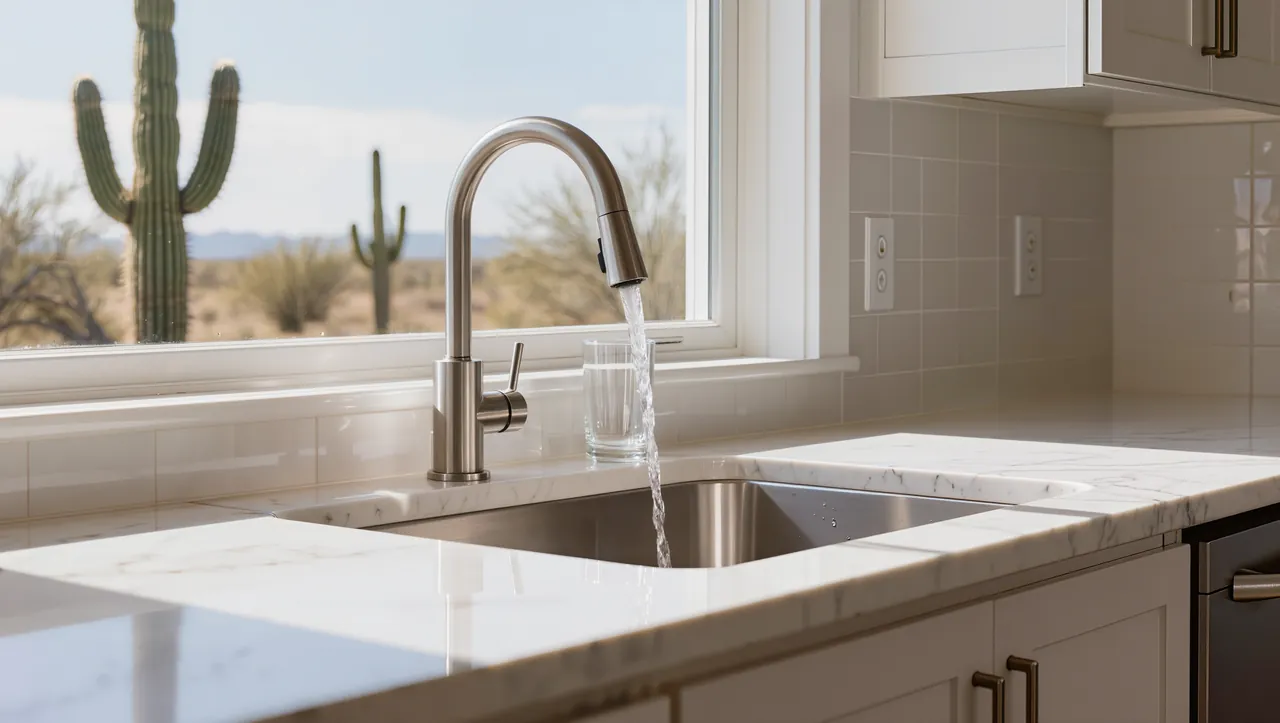
Reverse osmosis
Drinking water, finished at the kitchen sink
- Treats
- One faucet at the kitchen sink, and the ice maker if you want.
- What it is for
- Drinking and cooking water. It removes most dissolved minerals, salts and metals.
- What it doesn’t do
- Treat the rest of the house, or protect the water heater.
- Where it goes
- Inside the sink cabinet, with its own faucet.
- Upkeep
- Filters about once a year. The membrane every few years.
Quoted flat, before we start
System options
Most homes need one or two. The reading at your tap says which, before you spend a dollar.
- 01
Softener alone
The baseline for a hard-water house. It stops scale at the door and protects the water heater, the fixtures and the glass. For many homes, it is the whole answer.
- 02
Softener with whole-house filtration
For homes that also want filtered water at every tap, or have sediment to deal with. The filter goes on the same loop, the same day.
- 03
Softener with reverse osmosis
Soft water for the house, and reverse osmosis at the kitchen sink for drinking, cooking, coffee and ice. The pairing is common because each one does what the other can’t.
- 04
All three
Whole-house softening and filtration, with reverse osmosis at the sink. Three machines, three jobs, no overlap.
Installation, from test strip to soft water
Where the loop is waiting, a morning’s work. The number at your tap picks the equipment.
- 01
A reading at your tap
We test hardness at your house, not from a citywide average. For reverse osmosis we add a dissolved-solids reading. On a private well, we suggest a lab test before anyone picks equipment.
- 02
Sized to the household
Grain capacity is matched to the hardness and to how many people live there. Too small and it regenerates constantly. Too large and it wastes salt and water between cycles.
- 03
Plumbed at the loop, with a bypass
Many Valley garages have a pair of capped pipes by the water heater, waiting since the house was built. That is the softener loop, and we use it. Where there isn’t one, we plumb one. The sprinklers stay on untreated water; plants gain nothing from soft water.
- 04
Programmed, tested, explained
Hardness, regeneration schedule and salt type are set before we leave, with a short walk-through of what to check each month. Reverse osmosis output is tested in front of you.
What it asks of you afterward
Every one of these comes with a chore. Here it is, before you buy, not after.
Water softener
Lift the lid on the salt tank once a month. Salt going down? Good. Most households spend roughly $60 to $150 a year on it. The tanks last a very long time, and the resin usually goes a decade or more.
Whole-house filtration
Filter media and cartridges wear out, and they get replaced on the schedule that system calls for. You hear that schedule before you choose the system, not after it is bolted to the wall.
Reverse osmosis
Prefilters and the final carbon about once a year. The membrane every few years, sooner on hard or well water. A softener upstream stretches the interval.
What these systems are for: scale, taste and protecting the equipment you already own. We don’t sell water treatment as a health product, and you should be suspicious of anyone who does. If you have a specific concern about your water, such as a private well, start with a lab test and match the equipment to the result.
Installed price, whole-house softener
$1,800 – $4,500 installed, agreed flat before we start.
- A standard salt-based softener for a typical home lands mid-range
- Added whole-house filtration, a new loop or an awkward location moves it up
- Reverse osmosis is quoted flat before we start: the system you choose sets most of it
Where the builder left a softener loop in the garage, installation is usually a morning’s work rather than a plumbing project. Compare the price with a water heater that retires four years early.
Current offer
Free water hardness test
We test yours at the tap, show you the reading, and tell you straight whether a softener will pay for itself in your house. Sometimes it won’t. Phoenix metro. No purchase necessary, and we mean it.
Or send the details and get a flat quote“My emergency call to your company knew just how distressed I was when I saw the water gushing out in my garage. You sent me the plumber who immediately calmed my nerves as I could see, he (Carlos) knew exactly what to do. He went above and beyond to ensure my garage floor was dry. I decided to go with your company's water softener and he installed it the following day. I could tell his attention to detail after it was installed--very neat and clean. I appreciate it very much.”
Before you book
What people ask before the first bag of salt goes in
Softener, filtration or reverse osmosis: which do I need?
Salt-based or salt-free water softener?
Do I need a water softener if I have reverse osmosis?
Will softened water taste salty?
Does a softener protect a tankless water heater?
Is treated water healthier?
You can’t move the Valley to softer water.
You can keep its minerals out of your plumbing and its taste out of your coffee. It starts with one reading at your tap.
Free water hardness test. Phoenix metro. No purchase necessary, and we mean it.