5 min readBleuwave Plumbing
Grease Is a Scheduling Problem. Solve It Before Friday Night.
Every kitchen drain line closes a little with each service. The one thing an owner controls is whether it gets cleaned on a Tuesday at 5 a.m. or cleared on a Friday at 8 p.m.
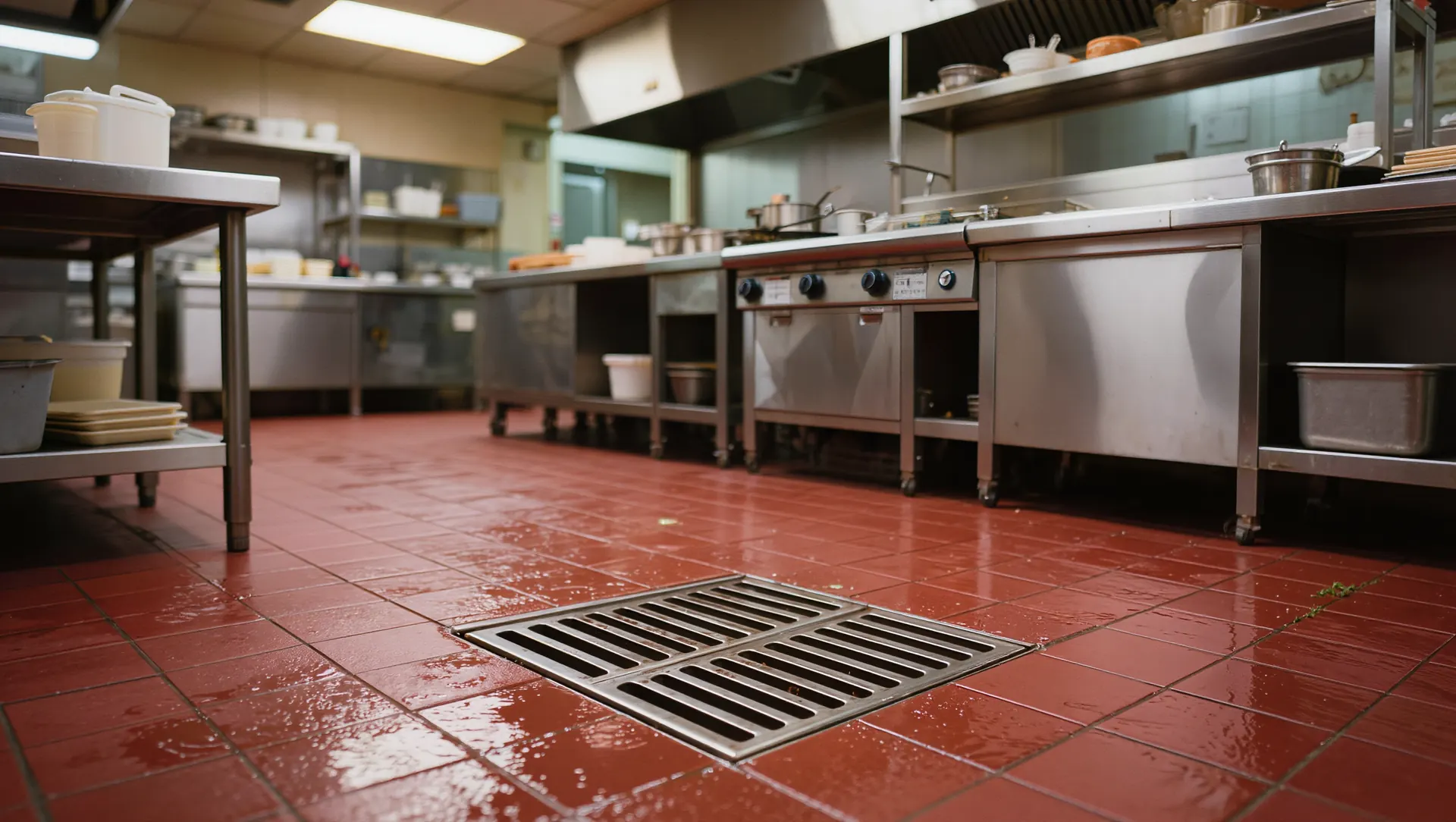
Friday, 7:40 p.m. The dining room is full, the ticket rail is full, and the floor drain by the dish machine has started returning water instead of accepting it. Gray water with a sheen on it creeps toward the line. Someone throws down towels. Someone else shuts off the dish machine, which solves the floor and creates a clean-plate shortage in about eleven minutes.
None of this is an accident. The line had been closing for months. It chose Friday because Friday is when the kitchen sends it the most water.
How a kitchen line closes
Fats, oils, and grease (the trade shortens it to FOG) leave the kitchen warm and liquid, riding in dishwater, pan rinse, and the mop bucket. Below the floor, the pipe sits at the temperature of the ground. The grease cools, thickens, and clings to the pipe wall. Food solids stick to the grease. Calcium from hard Valley water reacts with the fats and hardens the whole deposit into a waxy, soap-like crust that no hot-water flush will move.
It builds evenly around the full circumference, so a 4-inch line narrows the way an artery does instead of plugging at one spot. The kitchen drains normally until the opening gets small enough that one busy hour overwhelms it. That is why grease backups arrive at peak volume. The pipe was nearly full already. Service just supplied the last few gallons.
Several habits upstream speed this up, and staff can change every one of them:
- Pan and fryer residue scraped into the sink instead of the waste oil container
- Boiling water and degreasers poured down the line to “help,” which carry grease a few feet farther before it cools and sets somewhere harder to reach
- A disposal feeding food solids into a line that is already coated
- Coffee grounds and rice, which bind with grease into something close to mortar
A short list posted by the dish pit costs nothing. What not to put down the drain was written for homes, and most of it applies behind the line.
Traps, interceptors, and what each one protects
The two words get used interchangeably. They are different equipment.
A grease trap is usually a smaller unit inside the building, under a sink or set into the floor, that slows the water long enough for grease to float and be held back. Kitchen staff often clean it on a short cycle, sometimes weekly.
A grease interceptor is a large in-ground tank, often outside near the back of the building, serving the whole kitchen. A pumping company empties it on a schedule, and each pumping produces a manifest you keep.
Most Valley cities run a pretreatment or FOG program that governs this equipment: how often the interceptor gets pumped, what records you hold, and what happens when the public sewer downstream of your building starts showing grease. Requirements vary by city, so your city’s notice or its pretreatment office is the authority on the details.
The part owners miss is that the interceptor protects the public sewer. It does nothing for the pipe between your sinks and the interceptor, which is the pipe that backs up into your kitchen. The pumping truck is not a drain cleaning.
Snaking versus jetting
A drain cable, or snake, is a spinning steel coil with a cutting head. On a grease line it bores a hole through the middle of the deposit, the water goes down, and everyone goes home. The rest of the grease stays on the wall and grows back into the hole within weeks. The restaurant that cables every month or two is paying for the same clog repeatedly, in installments.
Hydro jetting sends high-pressure water through a nozzle with rear-facing jets. The jets pull the hose up the line and scour the full circumference, cutting the deposit loose and flushing it downstream to the cleanout. On a grease line it is the only common method that returns the pipe to something close to its original diameter. It costs more per visit than cabling. It costs less per year.
Pressure is not always the answer, though. Cast iron that has rusted thin, or ABS with a cracked joint, can be made worse by a jetter. So the camera goes in first.
Camera before, camera after
A sewer camera inspection before jetting shows what the line is made of, how much deposit lines the wall, and whether there is a sag, crack, or offset joint that will keep catching grease however often it is cleaned. The same camera afterward shows the same stretch of pipe, clean. The difference on the screen is what you paid for.
The footage does two more jobs. It sets the next cleaning interval from what actually came out of the line, instead of from a sticker on somebody’s calendar. And it leaves a dated record for whoever asks what has been done, whether that is the landlord, the inspector, or your own regional manager.
The inspection stakes
Under the food code that county inspectors enforce, sewage backing up in a food preparation area is the kind of condition that can close a kitchen until it is cleaned and sanitized. Not a note on the report. A closure, which becomes a public record, which ends up on lists people actually read.
Inspectors also look for evidence of maintenance. A dated service log with photos from the grease line tells a better story than a drawer of unsorted invoices. We can’t speak for any inspector. We can make sure the paperwork exists.
A backup during service costs you the covers from that night. A closure costs you the covers from that week, and the diners who read about it.
Keeping the work out of service
The best grease line maintenance is the kind the dining room never hears about. Most single kitchen lines can be filmed and jetted in a few hours, and nearly all of that work happens after close or before prep begins. Overnight and pre-dawn visits are routine for restaurant work, booked like any other appointment.
Once the line is clean, keeping it that way takes far less effort than getting it there. The interval depends on your volume and your menu: a kitchen running three fryers builds deposit much faster than a café with a panini press. The camera sets the date, and scheduled commercial drain service holds it.
What it costs, and the current offer
Commercial jetting typically runs $450 – $1,800, depending on how many lines, how long they run, access, and whether the work happens overnight. Camera work is included, and the price is agreed flat before the hose comes off the reel. New commercial customers can currently take 50% off hydro jetting, one location per booking, and it can’t be combined with a maintenance contract discount.
If the floor drain is returning water right now, stop the dish machine and the mop sink, skip the chemical opener, and call the 24/7 commercial line. If it isn’t, this is the better moment to book the camera, on a morning when nobody is holding a plate.
commercialrestaurantshydro jettingdrains