5 min readBleuwave Plumbing
The Cheapest Leak Is the One You Find on Paper, Not in Unit 112
For property managers and HOA boards, leak prevention is mostly a records problem: meters, valves, resident reports, and a capital plan. The wrench comes later, and costs less when it does.
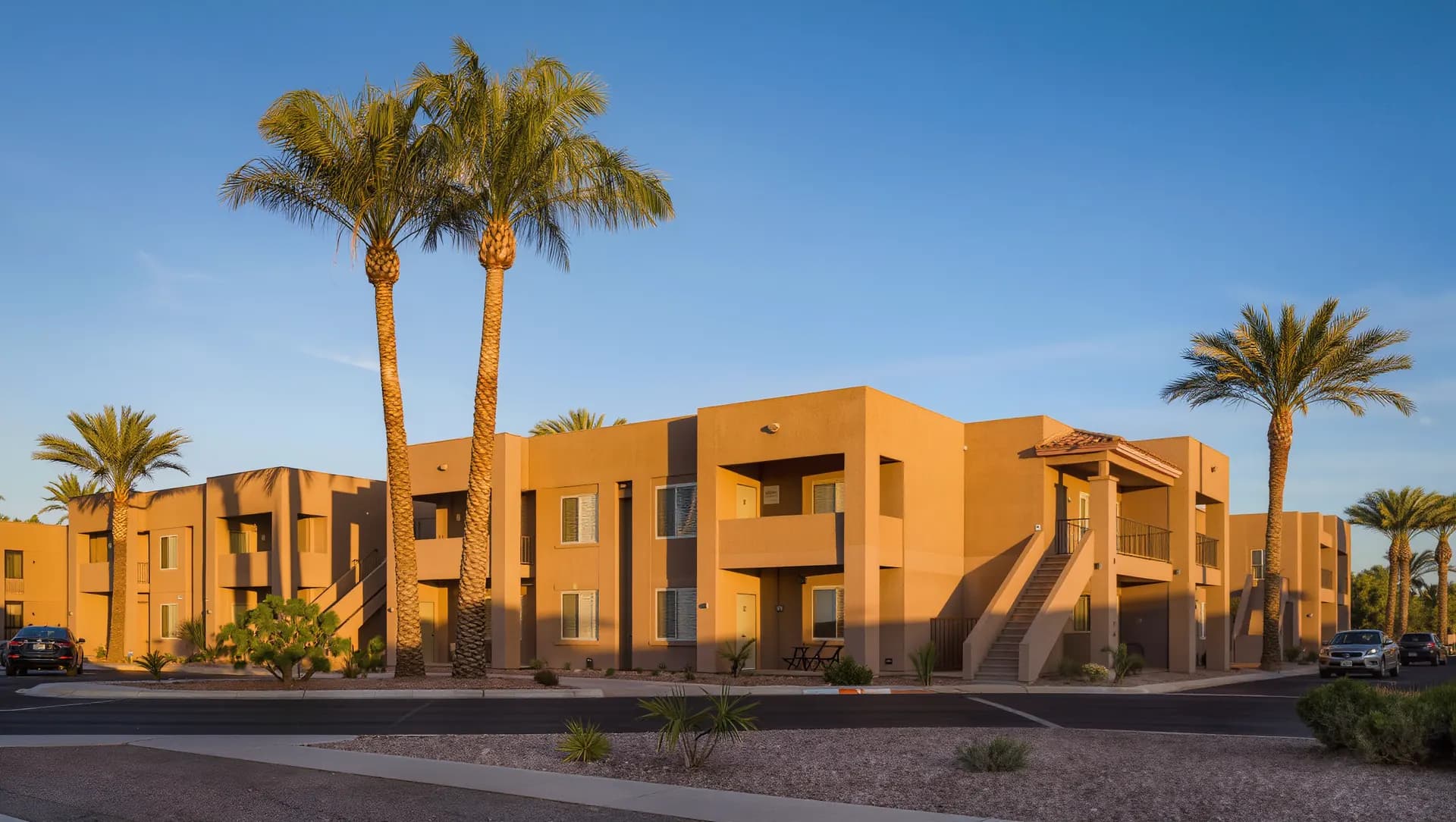
Unit 214 used 2,900 gallons last month. Unit 216, same floor plan, same number of residents, used 8,600. Nobody in 216 has noticed anything, because nothing in 216 looks wrong. The carpet is dry. The toilets are quiet. The water is going somewhere under the slab, and the only place it shows up so far is a spreadsheet nobody has opened.
Leaks in multifamily property get found in one of two ways: on paper, early and cheaply, or in a unit, late and expensively. The difference between the two is almost entirely administrative.
Why slab-on-grade complexes hide water
Nearly every apartment complex, townhome community, and condo building in the Valley sits on a concrete slab, with supply lines running beneath or through it. When one of those lines fails, the water has nowhere visible to go. It spreads under the slab, into the sub-base, sometimes toward the unit next door, and surfaces far from the break, if it surfaces at all. The stages are laid out in how supply leaks become slab damage. The short version for a manager: by the time a resident reports a warm floor or damp carpet, the leak has usually been running for a while.
The good news is that water leaves evidence in the billing long before it leaves evidence in the carpet.
Read the meters like a ledger
How a property is metered decides how visible a leak will be.
- Individually metered units make comparison easy. Sort last month’s consumption by floor plan and look at the outliers. A unit running two or three times its neighbors, with no change in occupancy, has earned a work order.
- Submetered units work the same way, provided someone actually reviews the submeter data instead of passing it straight through to billing.
- A single master meter buries a leak inside the property total. What would be obvious on a unit meter becomes a modest bump on a large bill. Compare each building, or each meter, against its own history and occupancy, and treat an unexplained step as a work order rather than a seasonal mood.
Irrigation meters deserve a line of their own. Landscape leaks are behind many mysterious summer spikes, and while they don’t damage buildings, they bill every day they run.
One more free check: late at night, when a building is quiet, watch the low-flow indicator on its meter. A dial turning steadily with nothing in use means something is leaking or running. Often it is a toilet. Sometimes it is not. The hidden leak cost calculator puts a dollar figure on a steady leak over a quarter, which is useful when an owner or board asks why a work order is worth approving.
Map the shutoffs before anything breaks
When a supply line lets go in an upstairs unit at 2 a.m., the most expensive minutes are the ones spent looking for the valve. Every property should have a map, on paper and in the maintenance office, showing:
- The main shutoff for each building, and where the meter or curb valve sits
- Isolation valves by building, riser, or unit, wherever they exist
- Every water heater location and its shutoff, especially heaters in closets above finished floors
- Irrigation, pool, and clubhouse supply shutoffs
- Backflow assemblies, which carry annual test dates of their own, covered in annual backflow testing
Then exercise the valves. A gate valve nobody has turned in ten years often won’t turn when it matters, or turns and then leaks at the stem. Finding that out on a Tuesday afternoon is a small repair. Finding it out mid-flood means shutting down the whole building. Where a building has no isolation valves at all, adding them is modest work that pays for itself the first time one unit’s leak doesn’t cost forty units their water.
Make reporting easy, and say what to report
Residents see problems long before managers do, and most don’t report small ones. They assume the drip under the sink isn’t worth anyone’s time. Tell them otherwise, in writing, at move-in and in periodic notices. The short list:
- A toilet that runs or refills on its own
- A floor that feels warm in one spot
- Damp carpet, lifting vinyl plank, or a musty smell with no obvious source
- Water pressure that has dropped
- The sound of running water with every fixture off
Make the report simple to submit, and respond where the resident can see it. Someone who reports a running toilet and watches it get fixed will report the warm floor next.
Walk the property once a year
An annual plumbing walkthrough catches failing parts while they are still parts. Water heater ages, drain pans, and relief valve discharge lines. Supply lines to toilets and faucets, especially the old plastic ones. Angle stops that have seized. Corrosion on any exposed pipe. Old stains at ceilings and baseboards that someone painted over and nobody investigated. Move-out inspections are a second chance at the same list, inside a vacant unit with no one to disturb.
Plan the repipe before the pipe plans it for you
Many Valley complexes built roughly between 1978 and 1995 were plumbed with polybutylene, and older properties may still carry galvanized steel. Both fail as systems rather than as isolated events. Copper can pinhole in hard water, too. When the leak log shows the same material failing in building after building, the question stops being whether to repipe and becomes how to phase it.
A phased commercial repipe runs one building or one stack at a time, with isolation valves installed first, water off for hours in one section instead of days for everyone, and a written schedule residents can plan around. For the arithmetic of when patching stops making sense, see the repipe decision.
A leak log is a capital plan that hasn’t been typed up yet.
Put it in the budget
A leak found on paper has a known cost. A commercial slab leak repair typically runs $1,800 – $12,000, depending on access and whether a reroute beats opening the floor. Repipes are quoted flat, phase by phase, so the work can be spread across budget years or folded into an HOA’s reserve plan, and financing is available on larger jobs. In condo and townhome associations, the governing documents decide who pays for a pipe under a unit’s slab. Read them before the first leak, not during it.
The other budget line is the one nobody writes in advance: emergency calls, flooring, drywall, resident relocations, and the insurance conversation. We’re open 24/7 for the night a supply line gives out, through commercial emergency plumbing. We would much rather meet you on an ordinary weekday, with a meter printout in one hand and a valve map in the other.
commercialproperty managementslab leaksrepiping