2 min readBleuwave Plumbing
How Water Line Leaks Become Slab Damage — and When to Interrupt the Process
Under a building, water works full time. A supply leak left running does not stay a plumbing problem — it graduates into a structural one, on a schedule nobody chose.
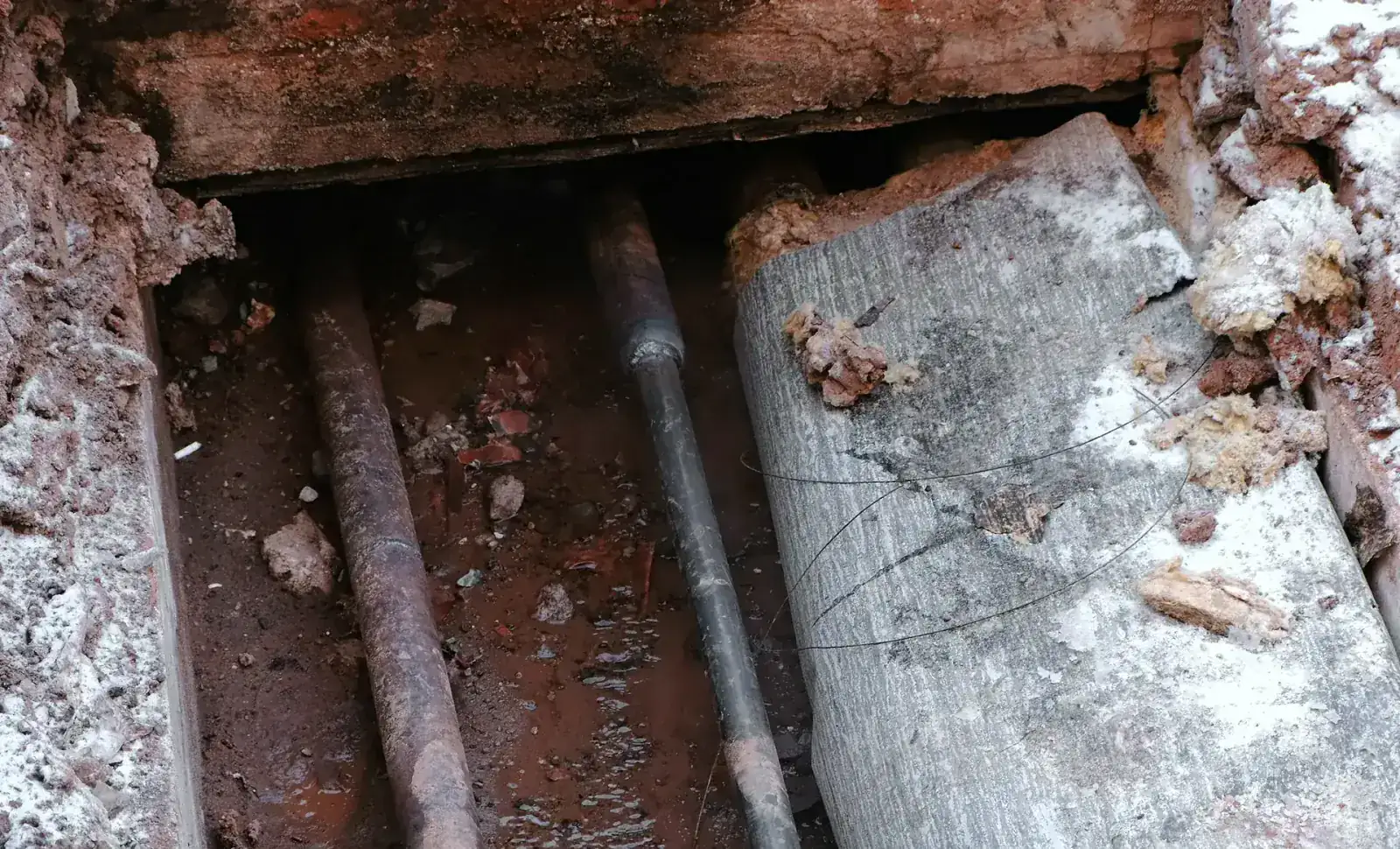
A supply line under a slab sits at water main pressure around the clock, which means a failure of any size runs around the clock too. A pinhole passing a modest few gallons an hour moves a swimming pool’s worth of water under a building in a season. The water does not evaporate down there. It goes to work.
The process, stage by stage
First it saturates. The sub-base under a slab (engineered fill, native soil, and in much of the Valley a clay that takes moisture personally) absorbs the flow. Expansive soils swell as they wet; sandier profiles wash out and consolidate. Either way, the material the slab was poured against stops being the material it was poured against.
Then the slab responds. Concrete follows its support. Softened or swollen ground lets sections settle or heave a fraction of an inch, and the building reports it upstairs: hairline drywall cracks radiating from door corners, doors that latch differently by season, grout lines opening, a floor that develops opinions.
Then it compounds. Moisture tracks the slab’s underside and surfaces far from the leak: efflorescence at the edges of vinyl, carpet tile lifting, the warm patch on tile that is the classic hot-line tell. By now the water bill has been quietly wrong for months, and the bill for everything else is being written. We itemized one of those bills line by line.
The leak is a plumbing problem for exactly as long as you find it early. After that it hires a structural engineer.
The commercial version runs longer
In commercial buildings every signal is muffled. Consumption hides inside a large bill nobody reconciles monthly, floor coverings hide the evidence, and in multi-tenant buildings the person who sees the symptom is rarely the person who pays the bill. We have opened office slabs where the line had been feeding the ground for the better part of a year. The repair was hundreds. The flooring and remediation were tens of thousands. The lease dispute over whose leak it was cost more than both.
For operators the fix is boring and effective: reconcile water consumption monthly against the same month last year, and treat any unexplained step as a work order rather than a curiosity. When a step does appear, commercial leak location turns the number on the bill into a spot on the floor.
The two cheap exits
Exit one: the meter test. Everything off, watch the low-flow dial. Two minutes, free, definitive. If it moves, book leak detection. Acoustic and thermal location puts the failure within a foot before anyone touches concrete.
Exit two: repair or reroute, promptly. A located leak is a bounded cost: a spot repair through one small opening, or a reroute overhead that abandons the failed run entirely. The reroute is often the better economics once flooring is priced in, and in occupied commercial space it is usually the only answer that doesn’t close the floor.
Both exits stay cheap for exactly as long as the water has not done its work. If your bill stepped up, your floor warmed, or your building has started reporting upstairs, call us. Residential or commercial, we locate before we cut, and we quote flat before we start. Want a number first? The hidden leak cost calculator puts a price on the waiting.
slab leakscommercialfoundations