Backflow Preventer Installation & Testing in Phoenix & Scottsdale, priced before we start.
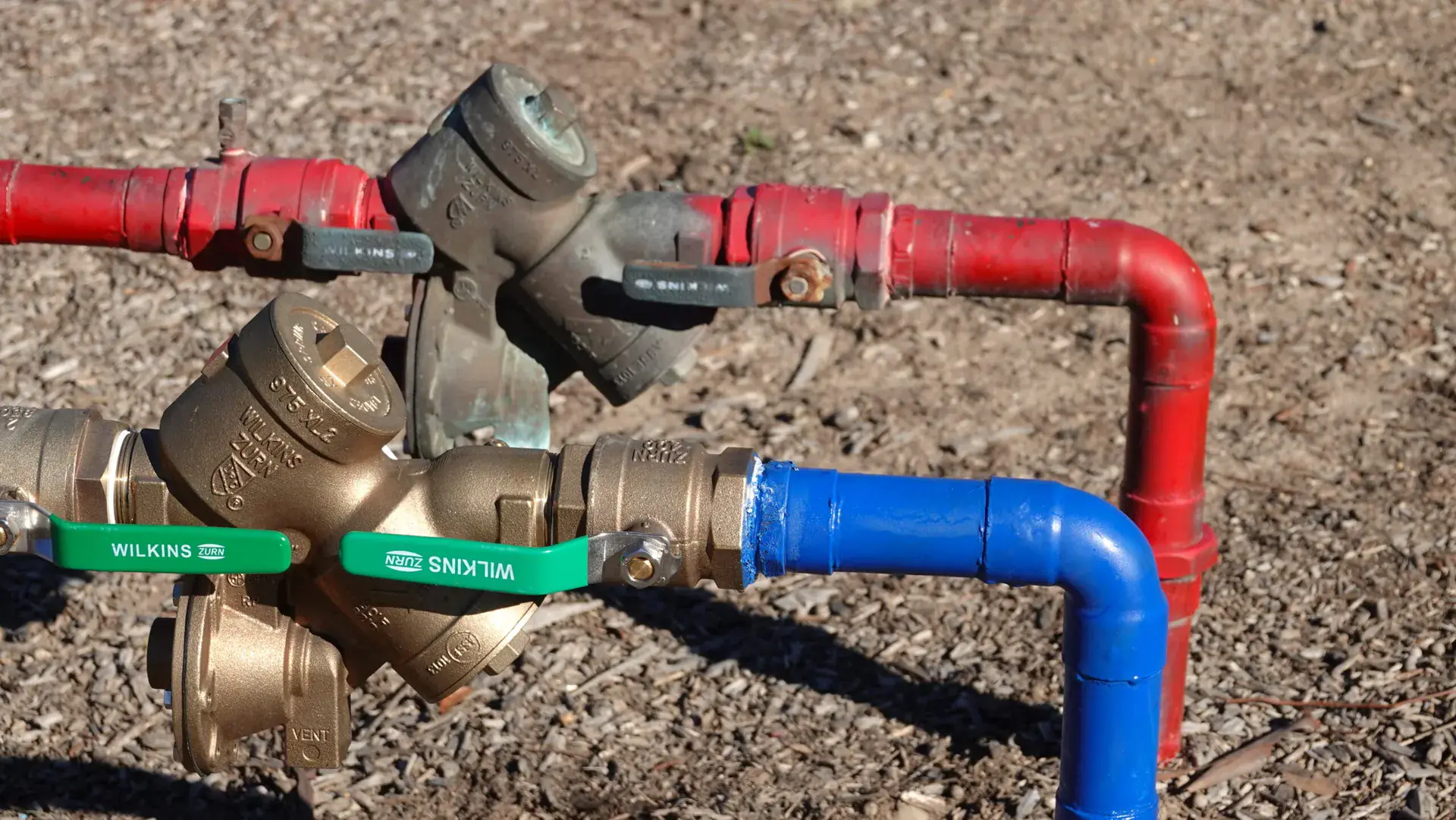
For a lot of homeowners, the first news that they own a backflow preventer is a letter from the water department with a test due date on it. The device has been sitting near the irrigation valves or the front hose bib for years: a brass assembly with a couple of valves and some small caps, usually half hidden behind a shrub. It has one job, and the job matters more than the part’s size suggests.
Normally the pressure in the city main is higher than the pressure in your house, so water flows one way: in. When that pressure drops, say a main breaks down the street or a fire crew opens a hydrant, the flow can reverse. That’s back-siphonage, and it can draw water out of sprinkler lines, a pool fill line, or a garden hose left in a bucket of fertilizer, back into the pipes you drink from. Backpressure, from a pump pushing harder than the street, can do the same thing. A backflow preventer is a set of spring-loaded check valves and air vents that shut the door when either happens.
Valley yards make this a live issue. Drip lines sit in soil that has seen fertilizer, weed killer, and whatever the neighborhood dogs contributed. Pools and fountains run on their own chemistry. Some lawns are fed through the irrigation system itself. That’s why many Valley cities require a preventer on irrigation and certain other connections, and require testable assemblies to be checked, typically once a year, with the results reported to the water provider.
The type matters. A pressure vacuum breaker, common on residential irrigation, has to sit at least 12 inches above the highest sprinkler head it serves. A reduced-pressure assembly, used where the hazard is higher, has a relief port that dumps water when something inside isn’t sealing. You can inspect yours from the outside: look for water dripping from the cap or relief port while the system is idle, plastic bonnets cracked by sun, missing test-cock caps, and any split in the body after a cold night.
A failing preventer rarely shows up as a health scare. It shows up as a puddle, a spray from the relief port, or a notice with a deadline. Letting it slide means paying for wasted water, collecting follow-up letters, and in the worst case leaving an open connection between your yard and your kitchen tap. The test itself takes well under an hour, and most failures are fixed with a rebuild kit rather than a new assembly.
What a failing preventer looks like
Water spitting from the relief port
On a reduced-pressure assembly, an occasional spurt can come from pressure swings in the street; a steady flow means a check valve is fouled or worn. Either one deserves a test before the next watering cycle.
Spray from under the cap when the sprinklers start
On a pressure vacuum breaker, that usually means a worn poppet or seal. Rebuild kits exist for exactly this, and the repair is quick.
A cracked body after a cold snap
Phoenix freezes rarely, but exposed brass assemblies are among the first things to split when it does. Wrap them before a forecast freeze; if one cracks anyway, it’s a quick pipe repair and a rebuild.
A letter with a due date
Where the city requires annual testing, the notice names the assembly and a deadline. Missing it tends to produce more letters, each a little firmer than the last.
Why did the summer bill jump?
A preventer leaking into a flower bed can run for weeks unnoticed. If the meter moves with everything off, leak detection will show whether it’s the assembly or the irrigation lines past it.
New pool, new zones, no preventer
Adding irrigation, an auto-fill, or a fertilizer injector without backflow protection is a code problem and a water-quality problem at once. It turns up often after do-it-yourself landscaping.
Testing, repair, and replacement
- 01
The annual test
With calibrated gauges connected to the test cocks, a certified tester checks each check valve and relief valve against the pressures it’s supposed to hold. It takes less than an hour, and the water is off only briefly.
- 02
Paperwork handled
Results go on the form your water provider asks for, and you get a copy for your records.
- 03
Rebuilt on the spot if it fails
Most failures come down to worn rubber: a seat, a disc, a spring. A rebuild kit restores the assembly, and it’s retested before we leave to confirm it passes.
- 04
Replacement, when rebuilding won’t do
Cracked bodies, seized shutoffs, and assemblies too old for parts get replaced. New ones go in at the right height, properly supported, and where next year’s tester can reach them.
- 05
Next year, one visit
The annual test can ride along with a plumbing maintenance visit, so one appointment covers the preventer and a look at the rest of the house.
How testing and repair are priced
Quoted flat, before we start
An annual test is a short, predictable visit. Repairs depend on the type and size of the assembly and whether a rebuild kit will do or the body has to be replaced. Replacement adds parts and, in some cities, a permit. Each is priced flat before any work begins.
Financing is available on larger jobsA backflow preventer spends 364 days a year doing nothing. The other day is why it’s there.
Backflow Prevention: questions we get asked
Straight answers, the same ones we give on the phone.