Sump Pump Service in Phoenix & Scottsdale, priced before we start.
Here is something most plumbing websites won’t admit: the majority of houses in the Valley have no use for a sump pump. They sit on slabs, above grade, in a city that sees roughly 7 to 8 inches of rain in a typical year. You can own a Phoenix home for decades and never meet a sump pit.
The exceptions are real, though, and they turn up in predictable places. Some custom homes in the hillside neighborhoods, and a few older houses in central Phoenix, have basements or below-grade garages. Some lots have a sunken courtyard or patio that collects runoff with no way to drain by gravity. Some pool equipment sits in a vault below the deck. Commercial buildings add elevator pits and parking levels. Any of those can end up with a pit and a pump to empty it.
In the desert, a sump pump’s entire working year happens in about three months. The monsoon arrives in July with storms that can drop an inch of rain in under an hour, often with a dust wall ahead of them and a power outage behind. A pump that has sat dry since last September has to start on the first try, with silt in its pit and a float that may have stuck where it was.
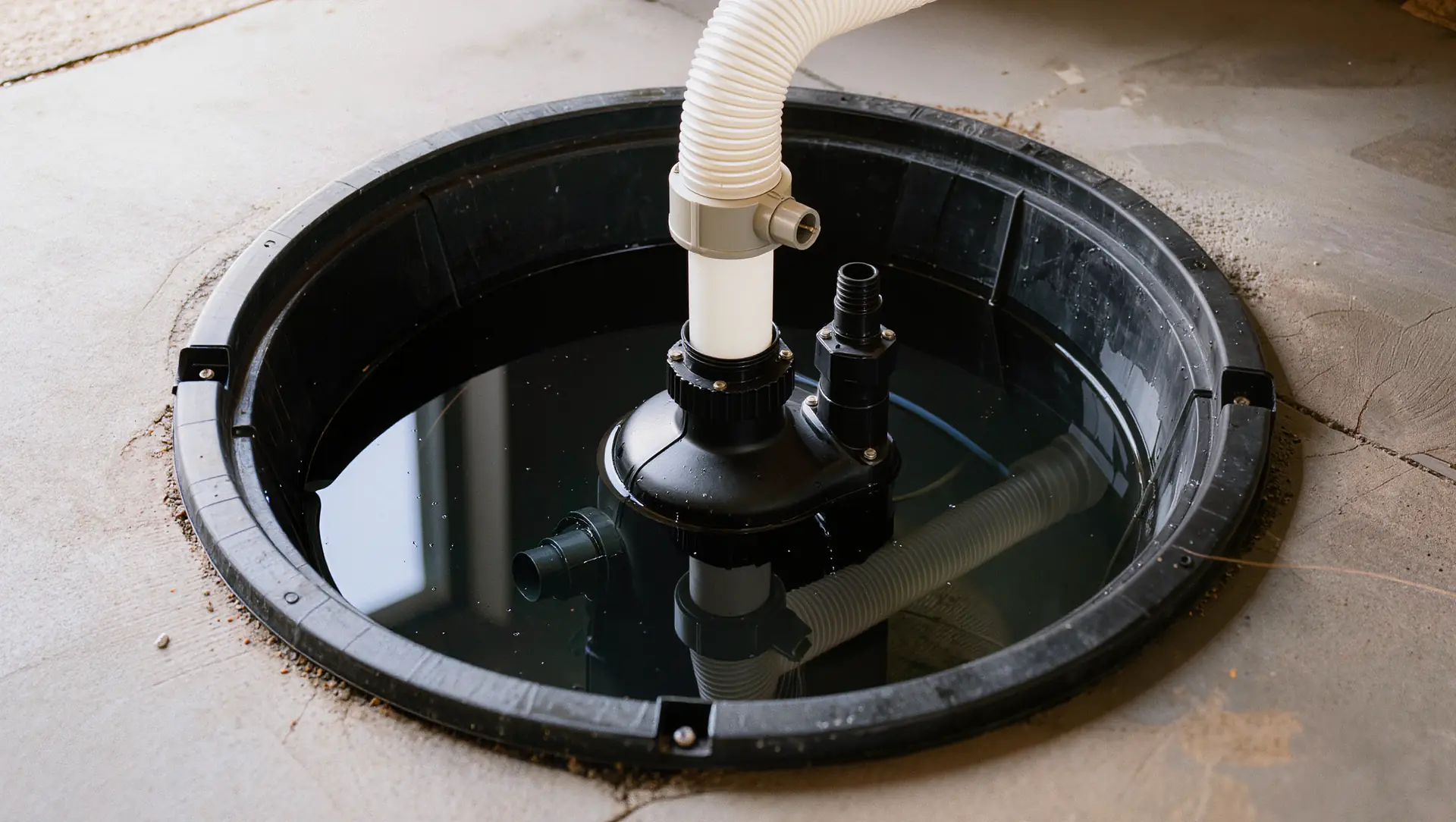
The machinery is simple. Water collects in the pit. A float rises with it and switches the pump on. The pump pushes water up a discharge pipe and out through a check valve, which keeps it from falling back when the pump stops. Nearly every failure we see involves one of those four parts: a clogged pit, a stuck float, a seized pump, or a check valve that lets the same water cycle back in all night.
So the work is mostly unglamorous. We test the pump with water before the season, clean the pit, check the float and valve, and confirm the discharge ends somewhere that drains away from the house rather than back toward it. Where a basement bathroom sits below the sewer line, the pump in question is a sewage ejector, a different machine with a sealed basin. If your home doesn’t need a pump at all, we will say so.
When a pump needs attention
It hums and nothing moves
The motor has power but the impeller is jammed or the intake is buried in silt. A pump in that state will burn itself out trying.
Nobody has tested it since last summer
A pump that sits dry for nine months is the one most likely to fail in the first storm. Pour a bucket of water into the pit in June and watch it start, run and stop.
It runs and runs, or clicks on and off
Running long after the rain has stopped suggests a failed check valve or a pump too small for the inflow. Rapid on-off cycling usually means the float is set wrong or catching on the pit wall.
Silt, gravel or a skin of dust in the pit
Monsoon runoff carries a lot of dirt, and whatever settles in the pit ends up at the intake. Cleaning the pit is dull work. It also prevents most seized pumps.
Water pooling where the discharge ends
A discharge that dumps beside the foundation, or back toward a sunken patio, sends the same water around again. It should end somewhere that drains away from the house.
The courtyard drain backs up before the pump gets a chance
Sometimes the pump is fine and the drain feeding it is packed with leaves and silt. Clearing that drain line fixes what a new pump won’t.
The pre-monsoon check, and after
- 01
Water in, water out
We fill the pit and watch the full cycle: float rises, pump starts, pit empties, pump stops, check valve holds. It takes minutes and tells you most of what you need to know.
- 02
Pit cleaned, float freed
Silt and debris come out, the float gets checked for free travel, and the intake screen is cleared. Many visits end right there.
- 03
A replacement sized to the pit
When a pump is finished, the new one is sized to how much water reaches the pit and how high it has to be lifted. Too small and it runs forever; too large and it short-cycles and wears out early.
- 04
Backup for the outage that rides in with the storm
Monsoon storms knock out power at the worst moment. Where a pit protects a living space, a battery backup pump or a high-water alarm is worth considering. Where it protects a gravel courtyard, it may not be, and we will say which.
What it costs
Quoted flat, before we start
A test and pit cleaning is a short visit. A replacement depends on the pump, the depth of the pit, the length of the discharge line, and whether a battery backup or alarm is added. Pits in office buildings and garages fall under commercial drain service and are quoted on their own.
Financing is available on larger jobsA sump pump is idle equipment with one job a year. June is a good month to find out whether it still remembers how.
Sump Pumps: questions we get asked
Straight answers, the same ones we give on the phone.