6 min readBleuwave Plumbing
What a 115-Degree Summer Does to Your Pipes, and What to Check
The sun can’t reach the pipes under your slab. It reaches nearly everything else, and by July the faucet handle marked C has become a suggestion.
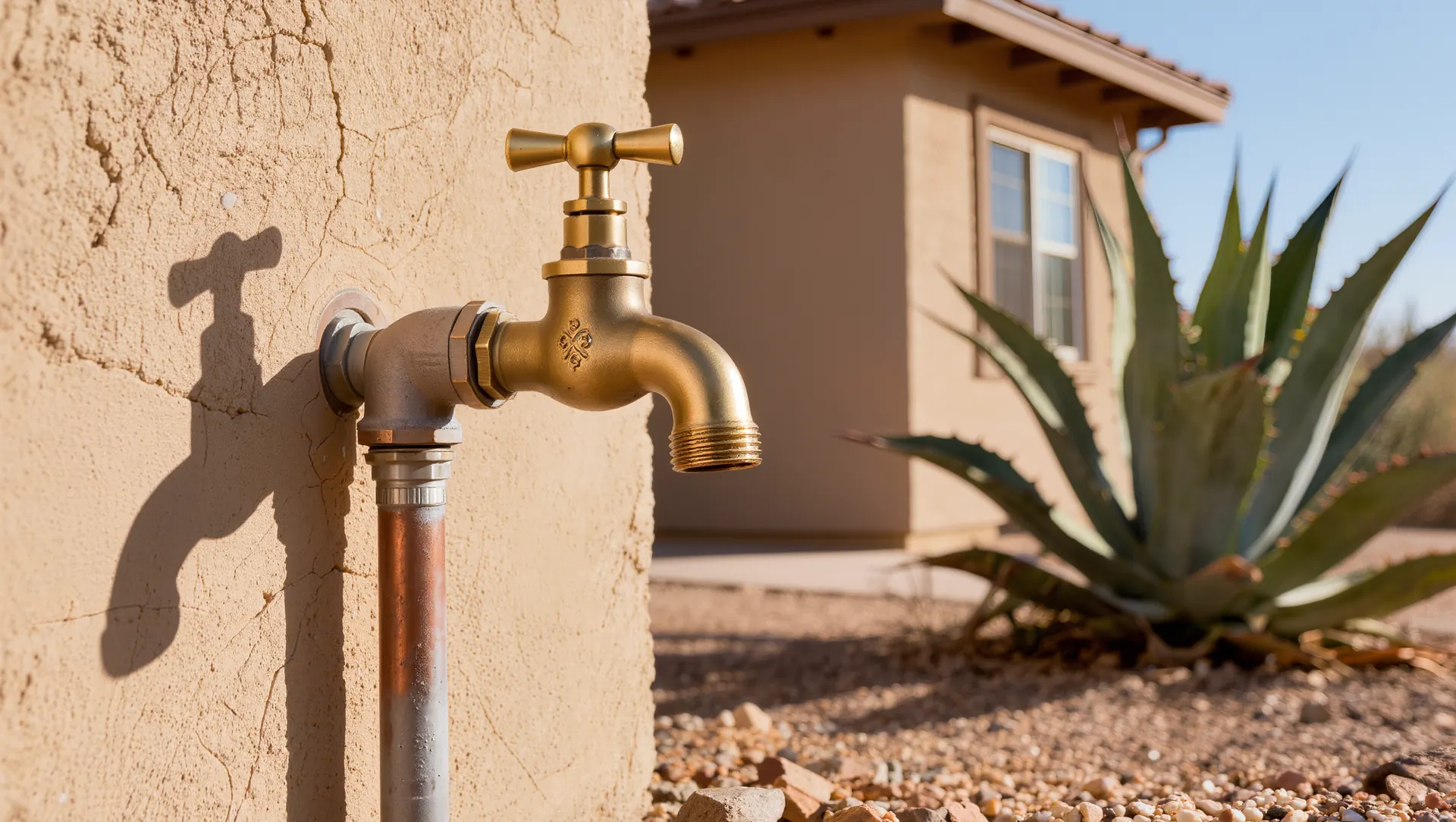
By July in Phoenix, the faucet handle marked C is a suggestion. Open it late in the afternoon and the first few seconds come out warm enough to make you check which way you turned it. Open the hose bib on the west wall and the first few seconds can burn. Nobody touched the water heater. The sun did, and the water was only the part you could feel.
A Valley summer is a four-month stress test for every pipe, valve, and fitting the house owns. Most of what it breaks, it breaks quietly. Here is where.
Why the cold water runs hot
The water was warm before it reached you. The city’s supply travels through canals and reservoirs under the same sky you do, and the mains sit in ground that has been baking since May. By late summer, Valley cold water can arrive in the 80s or higher.
Then the house adds its own heat. Plenty of supply lines leave the slab to run up exterior walls, across attics, and out to hose bibs on sun-facing stucco, and water that sits in them for a few hours takes on their temperature. A garden hose coiled on the gravel can hold water hot enough to scald, which matters most for the smallest people and animals in the household, who tend to find the hose first.
The fix is unglamorous. Run the tap for a minute before a child’s bath or a refill of the dog’s bowl, and keep hoses coiled in the shade. If one fixture runs hot on the cold side long after the others cool, the line feeding it probably crosses the attic.
The attic is an oven with plumbing in it
Summer attics here run far hotter than the air outside; past 140°F is ordinary. A surprising amount of plumbing lives up there. Newer homes run supply lines overhead by design. Older homes collect attic plumbing over the years, most often when a slab leak was fixed by rerouting the line through the ceiling instead of breaking concrete.
Each pipe material takes the heat differently:
- PEX tolerates attic temperatures but not sunlight. Where it runs exposed near a gable vent or out through an exterior wall, UV breaks it down. It needs a sleeve, a wrap, or a better route.
- CPVC grows brittle with age, and years of heat cycling hurry it along. Old CPVC can crack when someone merely bumps it, including the plumber, which is an awkward way to begin a visit.
- Polybutylene, the gray pipe of roughly 1978 to 1995, fails at its fittings in any weather. If you find it in the attic, the next step is the repipe decision, not a patch.
A small attic leak evaporates almost as fast as it drips. That sounds like good news. It isn’t. The water never stains a ceiling to warn anyone, so the only evidence is what hard water leaves behind: a white crust around a weeping fitting. Ten minutes on the joists with a flashlight will find it, provided you go up in June, before the attic becomes uninhabitable by anything but the pipes. Insulating attic lines keeps the cold side cooler and slows the expansion and contraction that wears joints out. As pipe repairs go, it is one of the cheaper ones a house can get.
The water heater’s summer problem is pressure
Warm incoming water means the water heater works less, the one favor summer does you. Take it: turn the thermostat down a notch in June. You need less heat for the same shower, and a lower setting cuts scald risk in a system already running warm.
The trouble is expansion. Water grows as it heats. In a house with a pressure-reducing valve or a check valve near the meter, that extra volume has nowhere to go, so pressure spikes every time the burner fires. An expansion tank absorbs the surge. When its air charge is gone, the spikes land on supply lines, fill valves, cartridges, and the relief valve, which starts spitting water down its discharge pipe. A relief line that drips after every heating cycle is reporting a pressure problem, and the pressure problem has its own article.
The garage doesn’t help. A tank that spends the afternoon in 130-degree air bakes its rubber connectors, its plastic drain pan, and whatever cardboard boxes have been stacked against it since the move. If the unit is past year eight in Valley water, summer is a sensible time to have the water heater looked at, before it picks a date on its own.
Outside, where leaks hide in plain sight
Hose bibs. The exposed pipe feeding a bib on a west or south wall takes the full afternoon. Look for a drip at the handle, which usually means a worn washer or packing, and a cracked vacuum breaker on the spout. Any exposed PVC that has turned chalky is showing you what sunlight does to plastic pipe that was never painted.
Irrigation. Timers run longer in summer, and so do the problems. An emitter pops off and fountains all night. A cracked line under decorative gravel waters one shrub very generously. In a desert yard, the greenest plant on the property is sometimes a leak with leaves. The backflow preventer on the irrigation riser, a brass valve that sits in direct sun, can split as well. Many Valley cities require that device, so a failed one gets repaired, not removed.
The pool. An automatic fill valve replaces summer evaporation without comment. It replaces a leak without comment too. To tell them apart, set a bucket of water on a pool step, mark the level inside the bucket and on the pool wall, turn the autofill off, and compare after a day. If the pool dropped more than the bucket, the loss isn’t weather. Pool plumbing leaks tend to live in the return lines and at the equipment pad, and they are cheaper to find before they soften the ground under the deck.
In a Phoenix summer, a leak can hide in an attic that dries it, a yard that drinks it, or a pool that refills over it. The water bill is the only witness that never looks away.
The June walk-around
An hour on a Saturday morning catches most of it:
- Watch the meter. Turn off irrigation and every fixture, then watch the low-flow indicator. If it moves, water is going somewhere. The hidden leak cost calculator will put a monthly price on it.
- Walk every irrigation zone while it runs, looking for geysers, soggy gravel, and the suspiciously thriving plant.
- Check each hose bib for drips, a working vacuum breaker, and sun-rotted pipe.
- Look over the water heater: the pan, the base, the relief line, and the manufacture date on the label.
- Climb the attic ladder early in the day, with a flashlight, and look for crust, stains, and gray pipe.
- Bucket-test the pool if the autofill seems busy.
- Leaving for the season? Shut the water off at the main and set the heater to vacation mode. Longtime residents of Sun City who head north for the summer tend to know this one already.
If the walk-around finds something
Some of it is yours to handle. The rest is what a maintenance visit is for. We read the pressure, check the expansion tank and relief valve, look over exposed lines and the heater, photograph what we find, and quote a flat price before any work starts. If a repair can wait until October, we will say so.
If the meter is moving and you can’t see why, that is a job for leak detection, and dispatch runs 24/7. In our experience, a pipe has never once waited for business hours.
summermaintenanceleakswater heaters