5 min readBleuwave Plumbing
The $10 Test for the Valve That Protects Every Pipe You Own
Water pressure is invisible until a supply line bursts. A hose-bib gauge and one night of patience will tell you whether yours is quietly wrecking the house.
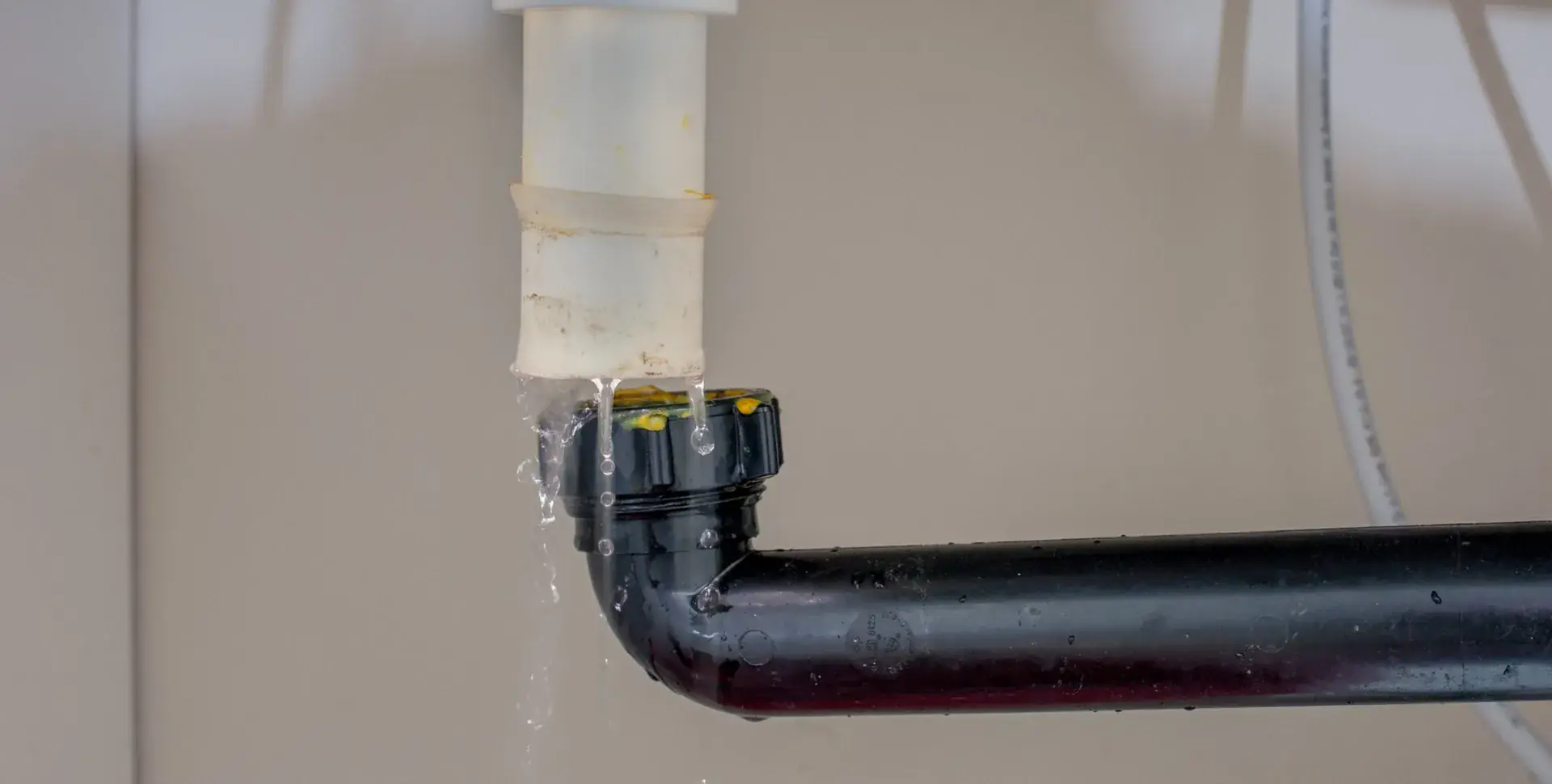
Buy a pressure gauge. The kind with a hose thread on one end and a dial on the other, about $10 at any hardware store in the Valley. Get one with a second, red needle if you can; it matters later. Screw it onto the hose bib nearest your water meter, open the bib, and read the number.
Few 30-second tests tell you as much about the next five years of your plumbing.
Most plumbing codes cap household pressure at 80 psi, and most homes are happiest somewhere in the 50s or 60s. The water arriving at your street is under no such obligation.
Why the city sends more than you need
A municipal water system has to push water uphill, feed fire hydrants, and reach the far end of every pressure zone with enough force left over to be useful. Homes at the low end of a zone, or close to a pumping station, can see street pressure well above 80 psi. That is not a malfunction. It is the system doing its job, and the utility’s job ends at the meter.
What happens after the meter is yours. That is where the pressure-reducing valve lives.
What a PRV does
A PRV is a bell-shaped brass valve on the main line, downstream of the meter, usually near where the line enters the house and often right beside the front hose bib. Inside is a spring and a diaphragm that throttle incoming pressure down to a set point. On top is an adjustment screw, which is the part homeowners discover, turn, and regret.
Homes built where street pressure runs high generally got one at construction. Plenty of older homes never did, and the owners have been living at street pressure for decades without knowing the number. The pipes knew.
How they fail
Springs fatigue. Diaphragms stiffen and tear. In Valley water, scale builds on the valve seat until it no longer closes cleanly. Most PRVs last somewhere around a decade, often less here.
They fail in one of two directions:
- Starving. Pressure drops. Showers go limp and the sprinklers sulk. You notice this one, so it gets fixed.
- Creeping. Pressure climbs slowly toward whatever the street is delivering. Nothing feels wrong. The shower is a little stronger, if anything, and the household enjoys it.
The failure you notice gets repaired. The failure you enjoy is the one that floods the laundry room.
What high pressure breaks, roughly in the order you notice
Banging when a valve shuts. Dishwashers and washing machines close their valves in an instant, and at high pressure the moving water slams to a stop. That knock in the wall is water hammer, and every knock is a small blow to every joint on the line.
A toilet that refills on its own, or hisses. Fill valves are small mechanisms asked to hold back the whole house’s pressure, and they wear out early when that pressure is high. The toilet that runs all night is sometimes a pressure problem wearing a toilet costume.
Dripping faucets and short-lived cartridges. Same mechanism, smaller parts.
Burst supply lines. The braided hoses under sinks, behind toilets, and on the washing machine are the weakest links in the system, and they tend to fail at the least convenient hour. This is the event that ends up on an insurance claim.
Sprinklers that mist instead of spray. Irrigation heads fog at excessive pressure, which wastes water and waters nothing in particular.
A dripping relief valve at the water heater. That brings us to the pressure you make yourself.
Pressure never appears on the water bill. It appears on the floor, all at once, usually on a weekend.
Thermal expansion
A PRV usually lets water in but not back out toward the street. That makes the house a closed system. Every time the water heater fires, the water inside expands, and in a closed system the extra volume has nowhere to go but up, in pressure. Overnight, when nobody is using water, those spikes can push a house set at 60 psi well past the limit, over and over, while everyone sleeps.
An expansion tank absorbs the surge. It is the small tank, usually gray or blue, mounted near the water heater. Inside is an air cushion behind a rubber bladder. When the bladder fails or the air leaks out, the tank fills with water and does nothing. Tap it: the top half should sound hollow. A tank that sounds full, or one that spits water from its air valve, has quit.
The water heater is usually the first to complain. That ticking and occasional relief-valve drip mean something specific, and so does a knock in the pipes. The fix sits alongside the water heater, not inside it.
The test, all the way through
Here is where the red needle earns its keep. It is a max-reading pointer: it gets pushed up by the pressure and stays at the highest point it sees.
- Evening: turn off irrigation and make sure no fixtures are running. Thread the gauge onto the hose bib nearest the meter, open the bib fully, and note the reading. That is your static pressure. Set the red needle against the black one.
- Overnight: leave it. Let the water heater cycle a few times.
- Morning: before anyone showers, read both needles.
What the numbers mean:
- Static between 50 and 70, red needle close behind: the system is healthy. Put the gauge in a drawer and check again next year.
- Static above 80: the PRV has failed open, or there isn’t one.
- Static fine, red needle far higher: thermal expansion. The expansion tank is dead, missing, or undersized.
- Static below 40: the PRV may be starving the house, or the pipes themselves are narrowing. In a pre-1970 home with galvanized steel, the second is likelier, and it is a different conversation.
What the fix involves
Replacing a failed PRV is ordinary pipe repair: one valve on the main line, one visit, a pressure setting that suits the house instead of the street. Recharging or replacing an expansion tank is smaller still. Neither job warrants cranking the adjustment screw to 80 because somebody wanted a stronger shower. A better showerhead costs less than a burst supply line.
If the house has been living at high pressure for a while, the valve is only half the job. Check what the pressure has already done. Watch the meter with everything off. If the low-flow dial is turning, book leak detection before the water finds its own way to the surface.
Or let us run the whole test. A maintenance visit is a natural time to read static and peak pressure, check the PRV and expansion tank, and look over every supply line in the house. The price is flat and agreed before we start, and if your numbers are fine, we will tell you that, too. Book a visit, or buy the gauge tonight. Either way, get the number.
water pressuremaintenanceleaks