5 min readBleuwave Plumbing
The Toilet That Runs All Night, and the Ten-Minute Diagnosis
The tank that refills itself at 3 a.m. isn’t haunted. It is leaking into the bowl, where nobody will ever see the water go.
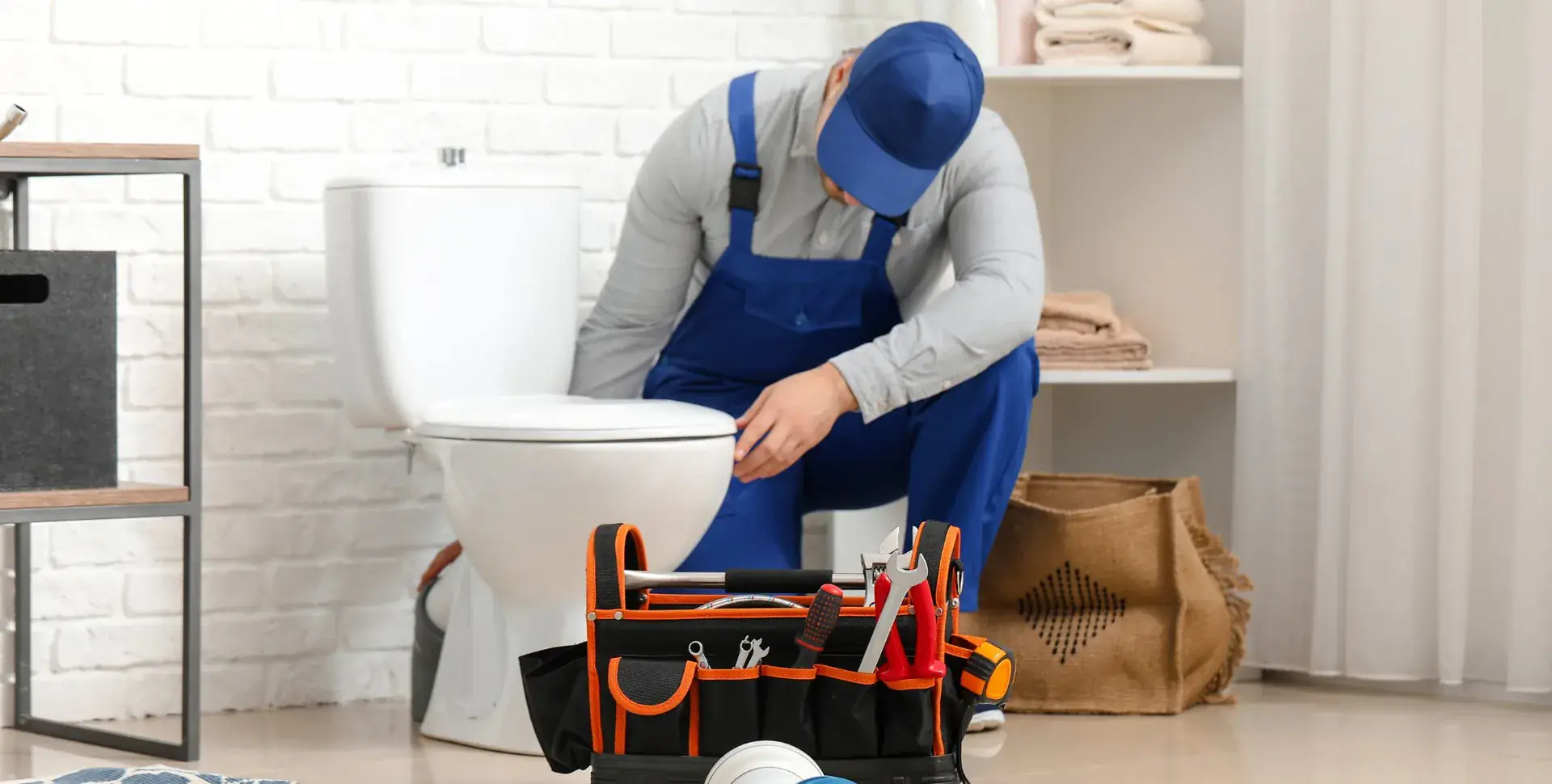
Every so often someone tells us, only half joking, that the house is haunted. The evidence is always the same. Sometime after midnight, with everyone in bed, the toilet in the hall bathroom runs by itself. A hiss, a few seconds of refilling, then silence. An hour later, again.
It isn’t a ghost. It is a leak with a sense of timing, and it happens to be one of the easiest leaks in the house to find, provided you know how a toilet tank works. Most people have never looked. Lift the lid.
A short tour of the tank
Everything in there serves one purpose: to hold a few gallons of water ready and dump them into the bowl on command.
- The flapper is the rubber seal at the bottom of the tank. Pressing the handle pulls a chain, the chain lifts the flapper, and the tank empties into the bowl. When the tank is nearly empty, the flapper drops back onto its seat and seals.
- The fill valve is the tall assembly on one side. When the water level falls, it opens and refills the tank.
- The float rides on the water and tells the fill valve when to stop. On newer toilets it is a cup that slides up the valve’s shaft. On older ones it is a ball on a long arm.
- The overflow tube is the open pipe standing in the middle. If the fill valve never shuts off, the extra water spills down this tube and into the bowl instead of onto the floor. A small refill tube clipped to its top also tops off the bowl after each flush.
Note what that design means. Every way a tank can leak ends in the bowl. The water leaves politely, down the drain, and the floor stays dry. That is why a running toilet can go on for months. It never leaves a stain.
The phantom flush, explained
When the flapper doesn’t seal perfectly, water seeps from the tank into the bowl a little at a time. The level in the tank drops. Eventually the float drops far enough to open the fill valve, which refills the tank for a few seconds and shuts off. That is the 3 a.m. visit. It will keep happening, on a schedule set by how badly the flapper leaks, for as long as the toilet exists.
The other common version is louder. The fill valve doesn’t shut off completely, water rises to the top of the overflow tube, and a thin stream runs down it all day and night. You hear it as a constant faint hiss, the kind the household stops noticing within a week.
The food-coloring test
This is the ten-minute diagnosis, give or take the waiting.
- Take the lid off the tank and put a few drops of food coloring in the tank water. Not the bowl.
- Don’t flush. Wait half an hour. Longer is better.
- Look in the bowl.
Color in the bowl means water is getting past the flapper. Clear water in the bowl means the flapper is sealing, and the suspect becomes the fill valve. Check it by looking at the top of the overflow tube: if water is trickling in, the fill valve is letting the level rise too high.
A pencil works too. Mark the water line on the inside of the tank, close the supply valve on the wall behind the toilet, and come back in an hour. If the level dropped, the tank is leaking into the bowl, or occasionally through a crack.
What’s usually wrong
The flapper, most of the time. It is rubber, and rubber ages. It hardens, warps, and stops conforming to its seat. In Valley water, with its heavy mineral load, scale builds up on the seat itself, so even a new flapper can’t seal against it until the seat is cleaned. A chain that’s too short holds the flapper slightly open. One that’s too long can fold underneath it. Flappers come in different sizes, commonly two-inch and three-inch, and some toilets don’t use a flapper at all, relying on a tower-style seal instead. Bring the old part to the store.
The fill valve. Scale and grit keep it from closing fully. Worn seals let it hiss. High household pressure wears it out faster, because a fill valve is a small part asked to hold back the whole house. If fill valves keep failing, check your water pressure before buying another one.
The float setting. If the water line sits at or above the top of the overflow tube, lower the float until the level rests about an inch below it. Most tanks have a line marked where the water should stop.
What it costs to ignore
A flapper that leaks slightly wastes a little water every hour. A flapper stuck partly open, or a fill valve pouring steadily into the overflow tube, can waste hundreds of gallons a day. None of it shows up anywhere except the water bill, and on a Valley bill that already swings with the seasons and the irrigation, a toilet leak can hide for a long time. The hidden leak cost calculator will translate a steady leak into dollars per month, which tends to settle the question of whether to fix it this weekend.
A running toilet is the only leak in the house that has already found the drain. It’s efficient that way. So is the water bill.
Repair or replace
Flappers, fill valves, chains, and handles are inexpensive parts, and a handy homeowner can swap most of them in an afternoon. One warning before you start: the shutoff valve behind the toilet may be the original. Older multi-turn valves seize in hard water, and turning one for the first time in 15 years sometimes makes it leak at the stem. If it won’t turn easily, stop there.
Replacement makes more sense when:
- The porcelain is cracked, in the tank or the bowl. No repair lasts.
- The toilet predates the mid-1990s, when federal rules set the modern 1.6-gallon limit. Older toilets commonly use 3.5 gallons or more per flush, so a new one saves water on every flush, not just the leaking ones.
- It rocks, or water appears at the base. That is the wax seal or the flange beneath it. On a slab, water at the base spreads under flooring before anyone sees it.
- You are on your third round of parts in a couple of years.
When the problem isn’t the tank at all (water on the floor with no obvious source, or a bill that stays high after the toilet is fixed), the leak is somewhere else, and leak detection is the next step.
If you would rather not
Plenty of people would rather not spend a Saturday with their arm in a toilet tank, and that is reasonable. Toilet repair is a short visit: we diagnose the tank and quote a flat price before any parts go in, then clean the seat, replace what’s worn, and check the pressure feeding it. If the toilet is due for replacement, or the whole bathroom is, bathroom plumbing covers new fixtures and the valves and supply lines behind them.
Either way, the house isn’t haunted. It just needs a new flapper.
toiletsleakswater bills