2 min readBleuwave Plumbing
Your Water Heater Is Talking. Here Is a Translation Guide.
Rumbling, ticking, whining, silence at the wrong moment — a tank narrates its own decline for years before it floods a garage. Learning the vocabulary is cheaper than the ending.
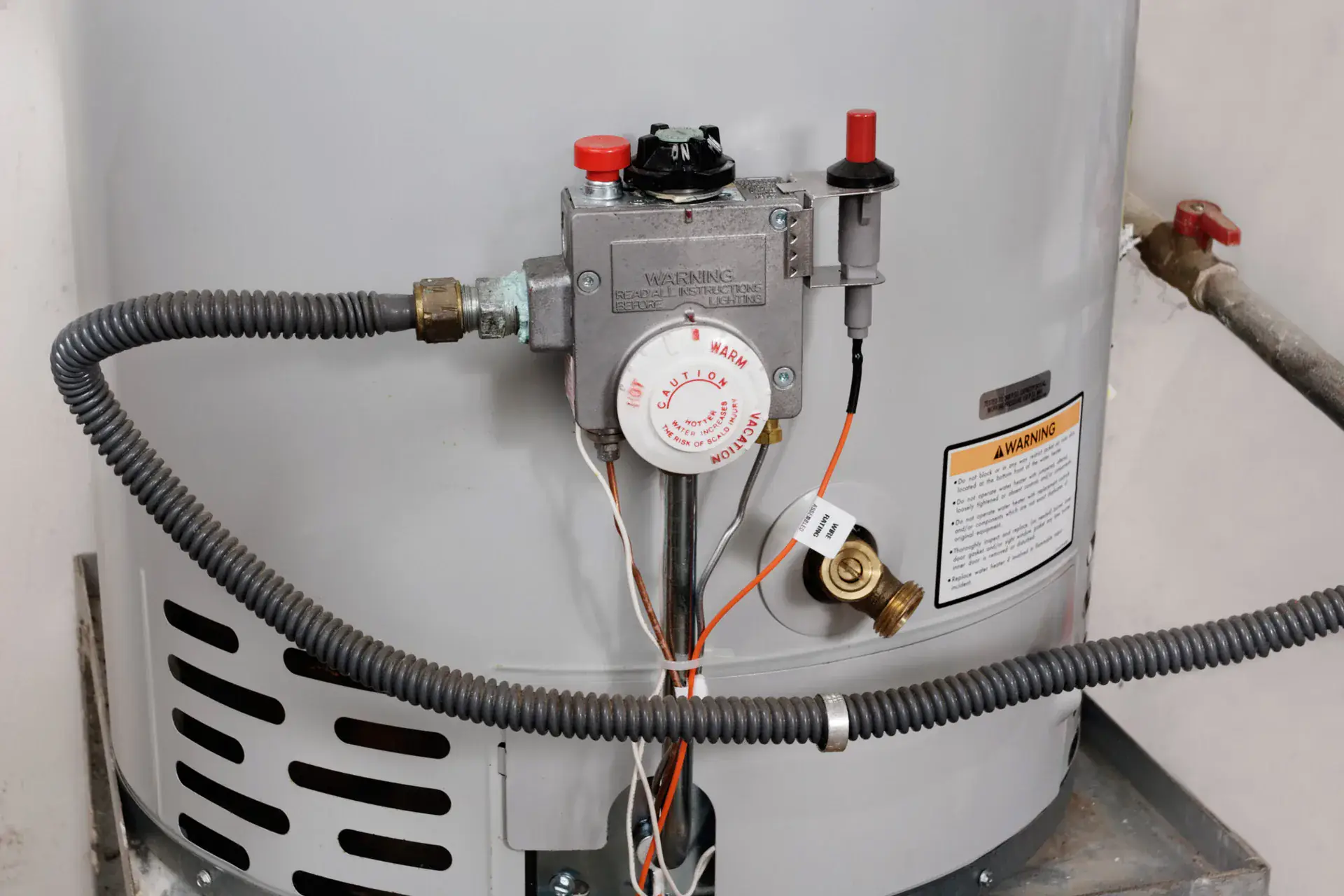
“It’s been making that noise for a while.”
We hear that sentence in garages all over the Valley, usually while standing in an inch of water. A water heater is the rare machine that announces its own failure years in advance, in plain language, to an audience that has learned to tune it out. It says one thing, means it, and is eventually proven right.
Here is the vocabulary, ordered from harmless to urgent.
The noises
Ticking and light popping on heat-up. Thermal expansion: pipes and tank moving as they warm. Harmless. Every house does it. It is on this list so you can stop worrying about it.
Rumbling, like a kettle full of gravel. Sediment. A layer of mineral scale covers the tank floor, water flashes to steam beneath it, and the steam punches through. In Valley water this starts early. Caught in the first few years, a flush clears it. After that the sediment hardens into something no flush will move, and the tank floor cooks under it.
A kettle-like whine or screech. Usually a restricted inlet valve or, on electric units, an element scaling over. Cheap to fix now. It does not improve with seasoning.
Banging when a tap shuts, from the pipes rather than the tank. Water hammer. Often a failing pressure regulator, which shortens the life of everything downstream, the heater included. Replacing it is a modest pipe repair that protects a much larger appliance.
The other tells
- Hot water runs out faster than it used to. Sediment is occupying gallons that used to be water. A 40-gallon tank with six inches of scale is a 30-gallon tank with a weight problem.
- Rust-tinted hot water, hot side only. The tank lining has failed and you are looking at steel. This is not a repair. This is notice.
- Moisture at the base, ever. A damp skirt is a leaking tank until proven otherwise, and it is almost never proven otherwise.
A tank failure is not a leak. It is 40 to 80 gallons on the floor, followed by the supply line refilling the tank so it can continue.
The age question
In Phoenix water, 8 to 12 years is the honest service life. The manufacture date is on the serial-number sticker. Past year eight, every noise above moves up one category in urgency, and the sensible move is replacing on a Tuesday of your choosing rather than a Sunday of the tank’s. It is also the right moment to ask whether the next one needs a tank at all; we ran that math separately.
If yours is rumbling, discoloring, or simply old enough to vote in tank years, we will give you a straight answer: flush it, part it, or replace it, priced flat before we start. And if it is making the 80-gallon announcement right now, shut the cold inlet valve on top of the tank and call. Emergency dispatch runs 24/7, which suits the hours tanks prefer to fail.
water heatersmaintenancewarning signs