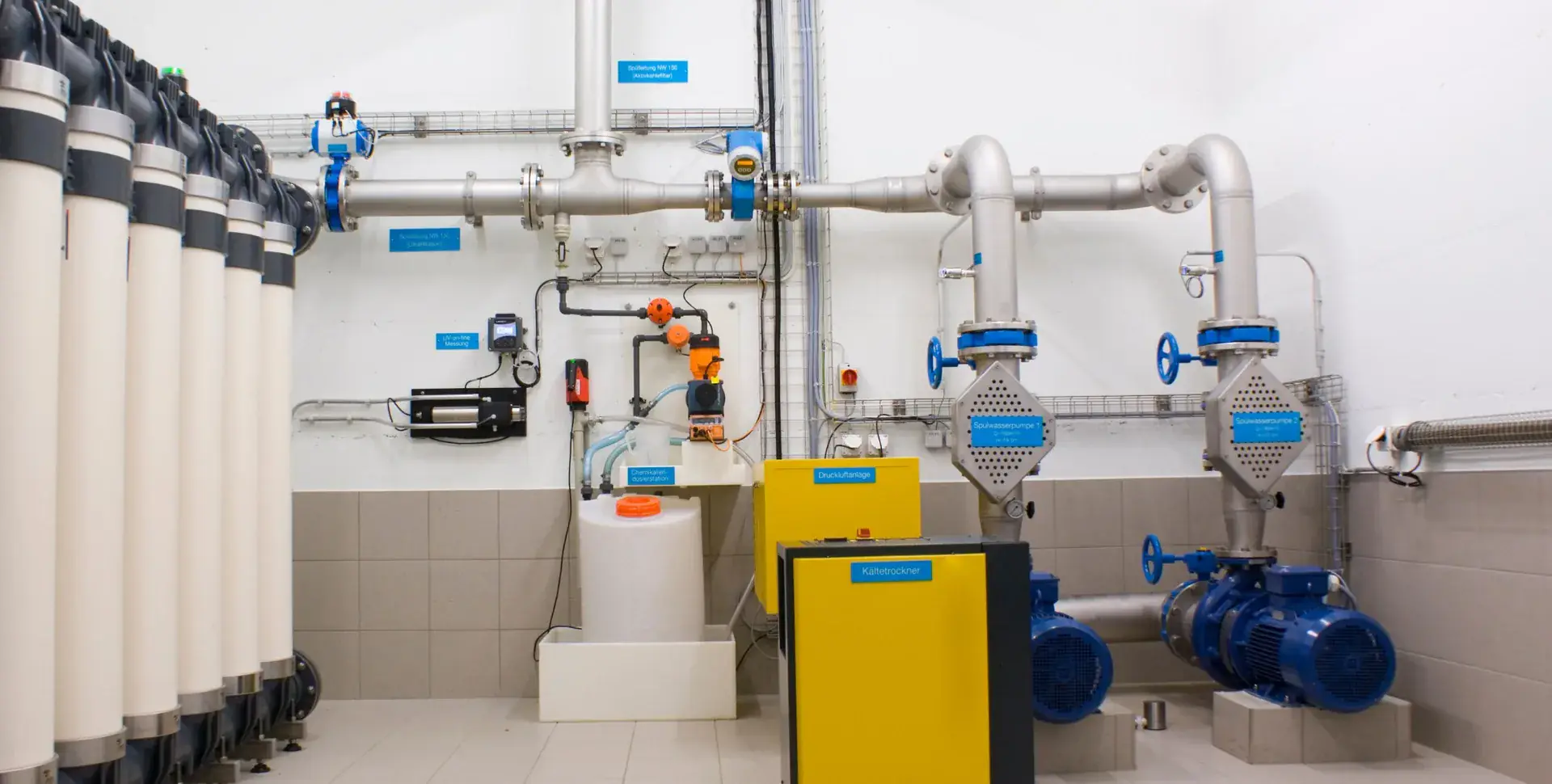
Commercial Water Filtration in Phoenix & Scottsdale, priced before we start.
Somewhere between 10 and 20 grains per gallon. That is the hardness range across most of the Valley, where the water comes largely from the Salt and Verde rivers and the CAP canal, and it is hard by any national yardstick. A household notices it as spots on the shower door. A business notices it on the service invoices for every machine that heats, chills, or sprays water, usually without connecting the two.
Hardness is calcium and magnesium, and they don’t stay dissolved when water is heated or evaporated. They come out as scale on anything hot or wet: espresso boilers, steam tables, dish machines, ice machine evaporators, combi ovens, water heaters. The equipment keeps working for a while, less efficiently, and then it needs a descaling call or a replacement part. Some manufacturers set water-quality conditions in their warranty terms, which makes untreated water a more expensive habit than it looks.
Softening and filtration are different tools, and commercial buyers get sold the wrong one often. A softener swaps hardness minerals for sodium through ion exchange; it stops scale but does nothing for taste. Carbon filtration removes chlorine taste and odor and some organic compounds, which matters for coffee, tea, and fountain drinks. Reverse osmosis pushes water through a membrane that strips out most dissolved solids, which some espresso and ice equipment prefers and a restroom sink will never need. A sediment prefilter protects all of it.
Sizing is where commercial systems go wrong. A softener has to handle your peak flow without dropping pressure and your daily gallons without running out of capacity between regenerations. We measure hardness at your tap, estimate draw from the fixtures and equipment, and size to that. A café, a hair salon, and a medical office don’t need the same system, and a unit picked off a catalog page usually shows it within a year.
The payoff turns up in places you already pay for: fewer descaling calls, longer life from your commercial water heater, fewer spotted glasses sent back to the dish line. The hard water cost calculator estimates the difference, and the Field Report explains why Valley water is so hard in the first place.
Where hard water shows up in a business
Spotted glassware straight out of the dish machine
White film and spots are minerals left behind as water evaporates. More rinse aid won’t fix it.
Ice machine descaling more often than the manual says
Scale on the evaporator slows the harvest and eventually stops it. Treated water stretches the interval.
Coffee that tastes different week to week
Chlorine and mineral content both change flavor. Consistent water is the cheapest route to consistent coffee.
White crust on faucets and pre-rinse sprayers
If it is visible on the outside of a fixture, it is building up inside the equipment you can’t see.
The water heater has lost recovery
Scale on the heat exchanger insulates the water from the burner. Treating the water costs less than treating the heater.
Salon clients mention color and rinse
Hard water affects how color takes and how hair feels after a rinse. Stylists usually notice before anyone else does.
How a commercial system gets specified
- 01
Test at the tap
Hardness, chlorine, and total dissolved solids measured at your building, not assumed from a citywide average.
- 02
Equipment list first, water plan second
We note what uses water and what each piece needs. Espresso machines, ice machines, and dish machines often want different things.
- 03
Sized to flow and daily use
Softeners and filters matched to your peak flow and gallons per day, so pressure holds and capacity doesn’t run out mid-shift.
- 04
Installed with a bypass
A bypass valve lets the system be serviced without shutting off water to the building. Where treated water feeds equipment that needs it, the right backflow assembly goes in as well.
- 05
Maintenance on your usage, not the box
Filter changes and membrane replacements set by the gallons you actually run, with a record of when each was done.
How it’s priced
Quoted flat, before we start
What moves the price: the type of system (softening, carbon, reverse osmosis, or a combination), your peak flow and daily usage, where the equipment can go, and whether new plumbing is needed to reach it. Larger systems can be financed.
Financing is available on larger jobsHard water never sends an invoice of its own. It just makes every other invoice a little larger.
Water Filtration: questions we get asked
Straight answers, the same ones we give on the phone.